

Spider plant, Chlorophytum comosum, produces arching leaves and small plantlets on long runners. Its thick roots store water, making it relatively forgiving, but steady care produces a better display than repeated wilting. Give it useful filtered light, a draining container, and moisture checks before watering.

Provide bright filtered light

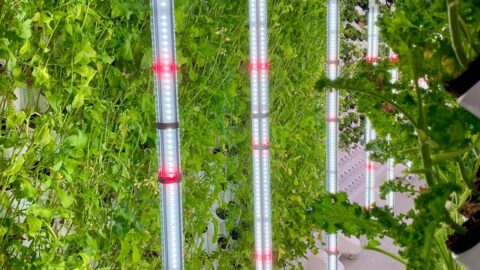
A bright position supports fuller growth and plantlet production. Lower light may be tolerated, but slows growth and drying. Acclimate stronger exposure gradually and avoid scorching heat against glass. A suitable grow light can supplement inadequate daylight. Window direction is only a guide; assess what reaches the leaves. Our light guide explains the practical checks.
Keep room conditions steady
Comfortable indoor temperatures suit the plant. Keep it away from cold glass, drafts, and heater outlets. A plant surviving a cool spell is not proof that all container specimens tolerate frost. Average indoor humidity is often workable, although very dry heated air can increase stress. Maintain airflow and leave room for the long leaves and runners rather than wedging them against a wall.
Choose a draining pot matched to the roots

Use suitable open houseplant mix that retains some moisture without remaining saturated. Repot when crowding, rapid drying, a distorted pot, or deteriorated medium requires it. A modest increase is easier to manage than excess wet mix around a small plant. Our spider plant repotting guide explains moving the clump or dividing it into complete rooted sections.
Water as the upper medium begins drying
Check below the surface and learn the pot’s changing weight. Water evenly, let excess escape, and empty runoff. Avoid repeated severe drying as well as persistent saturation. The interval changes with light, temperature, pot size, and growth. If brown tips keep appearing, review water quality and fertilizer use alongside moisture. Our brown-tip guide explains the different causes.
Root plantlets with their crowns above the surface

Allow a healthy spiderette to develop several leaves before using it. It can root against lightly moist mix while still attached to the parent, or after separation in suitable medium or clean water. Keep the crown and leaves above the rooting area. Our propagation guide covers the options. A detached ordinary leaf is not the same as a complete growing plantlet.
Feed growth and inspect changes
Use a suitable fertilizer according to its label and account for nutrients already in the mix. Extra fertilizer can contribute to salt damage rather than repair a brown tip. The NC State Extension species profile describes its storage roots and propagation. Inspect roots, moisture, and pests if decline continues; our troubleshooting guide explains the checks.
Protect leaves from chewing animals
The ASPCA lists spider plant as non-toxic to cats and dogs, but eating foliage can still upset digestion. Keep loose plantlets, potting materials, and treatments protected. Claims of an opium-like or hallucinogenic effect should not be used to encourage chewing. Our spider plants and cats guide covers practical access management.

I have two spider plants. Both of them have new growth but some of the long leaves are getting brown and almost all of them are kinking instead of nicely arching over. I have switched to filtered water and have been letting the soil dry some between watering. Not sure what I am doing wrong.
Hi!
Is the browning only occurring in the old leaves of the new ones as well? Is the browning starting from the tips (crispy, dry) or does it seem like more of a general browning thing? Additionally, are you sure you’re not letting the soil dry TOO much? Mine starts looking sad and kinking when I leave it without water for too long. Also be sure to check whether the soil is not clumped around the roots.
When someone asks questions about what’s wrong with a plant it’s quite difficult to answer them without actually seeing it, so my advice usually consists of a series of questions like this. Just try going over all the possible causes and eliminate them one by one, basically.
Good luck, I hope the plant perks up!