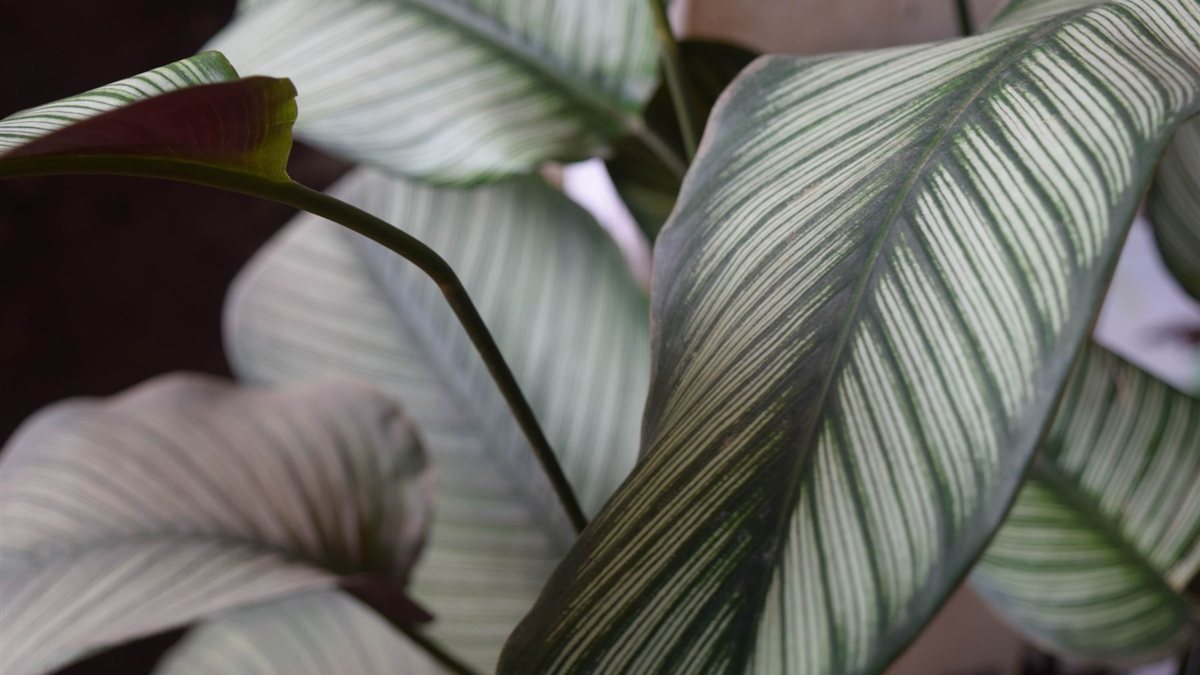
You mist a calathea, watch droplets settle on its patterned leaves, and feel you have dealt with the dry air. By the next check, the droplets are gone. The brown edges remain.
The spray did wet the leaves. That does not tell you whether the surrounding air stayed more humid for a useful length of time.
Measure the air, not the droplets
University of Illinois Extension’s houseplant care guidance explains the limitation of misting: the increase in humidity is brief. A spray bottle is a poor substitute for checking conditions around the plant.
Place a hygrometer near the foliage, away from a direct blast of water or a humidifier outlet. Look at readings at different times, including when heating is running. One reading beside a wet leaf can give the wrong impression of the rest of the day.
If the room stays dry, a suitably maintained humidifier can address the air for longer than a hand sprayer. Follow its cleaning instructions and avoid leaving nearby surfaces wet.
Brown edges do not identify the cause
A crisp margin is damage, not a humidity meter. Before increasing anything, inspect the potting mix, the underside of the leaves, and the plant’s position. Strong direct sun, root problems, or pests need a different response from dry room air.
Use our calathea troubleshooting guide to compare the pattern of damage. Ask whether it affects old leaves, new growth, or one side of the plant.
Do not water the roots to humidify the room
Adding another drink because the air feels dry can leave the root zone wetter without solving the air problem. Check moisture before watering, and empty water caught in the outer pot.
Our calathea care guide brings light, moisture, and humidity together. Keep a short record of what you change so you can judge the result.
Existing brown tissue will not turn green again. Watch the condition of new growth rather than respraying an old edge and expecting it to repair itself.