The timer works. The lamp comes on every morning. Yet the plant still stretches toward the window. Before buying a stronger light, check where the existing light reaches the foliage.
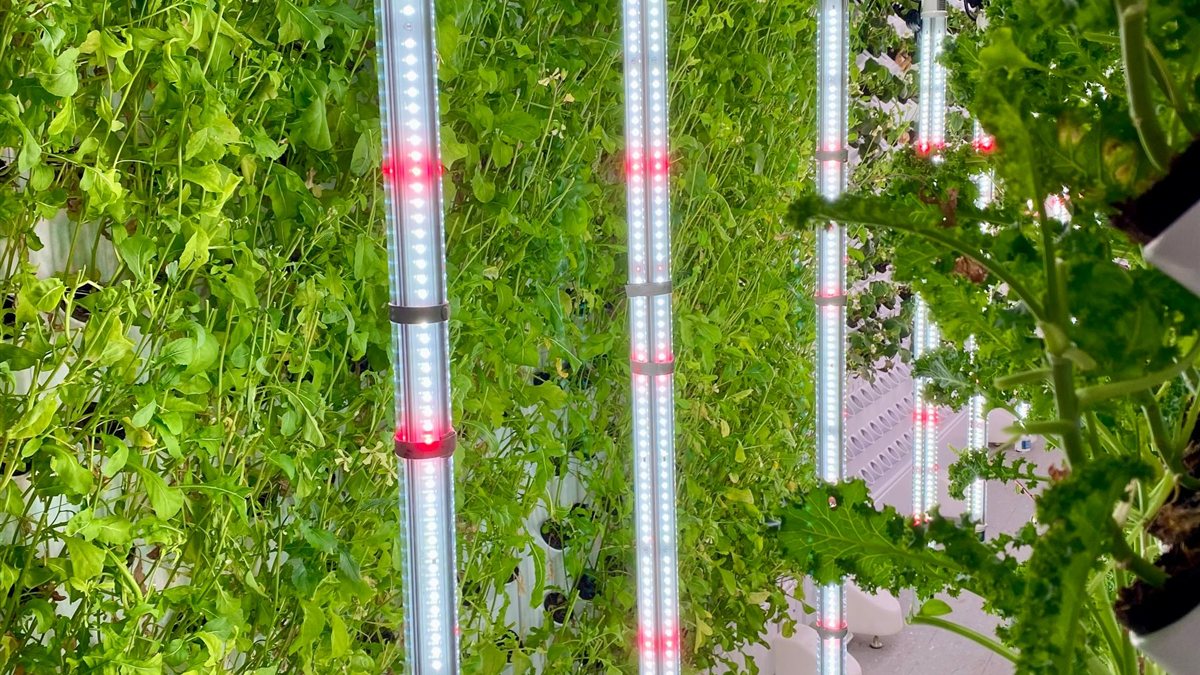
A bright lamp overhead and useful light at leaf level are different measurements. The distance, angle and area covered can leave a plant receiving less than its owner expects.
Make a four-part light check
- Measure the distance to the leaves. Use the nearest and farthest foliage, not just the top of the pot.
- Check the coverage. A plant beside the beam is not receiving the same light as the plant beneath it.
- Read the fixture’s guidance. Look for recommended hanging height and coverage for its output and the kind of plant.
- Check the timer. Record the total daylight and supplemental-light period, including a suitable dark period.
The University of Minnesota’s lighting guide explains that light intensity changes with distance. It distinguishes electrical watts from the light reaching a plant and describes PPFD as a useful plant-level measure. There is no single hanging distance that suits every lamp.
A manufacturer’s coverage chart is more helpful than the fixture’s color in a social-media photograph. Keep heat-producing equipment at a safe distance, and follow the fixture’s electrical and installation directions.
Move one variable, then watch new growth
If the instructions support a closer position, make a controlled adjustment rather than putting foliage against the lamp. Keep a note of the height and lighting period. Compare new growth over time; old stretched stems will not shorten when the lighting improves.
Our guide to indoor light can help account for the window’s contribution. If the plant is a snake plant, our snake plant light guide explains why tolerance of a dim spot is not the same as strong growth.
The winter-care suggestions at House Digest include supplemental lighting when needed. The useful next step is checking the light you already have at the plant, not counting how many lamps are switched on.