Your poinsettia has drainage holes, yet the compost stays wet and leaves begin to drop. Before blaming your watering schedule, lift the pot out of its festive wrapper. The water may have left the soil without leaving the display.
Foil sleeves and watertight covers can turn a draining nursery pot into a container with a reservoir underneath it. From above, that trapped water is easy to miss.
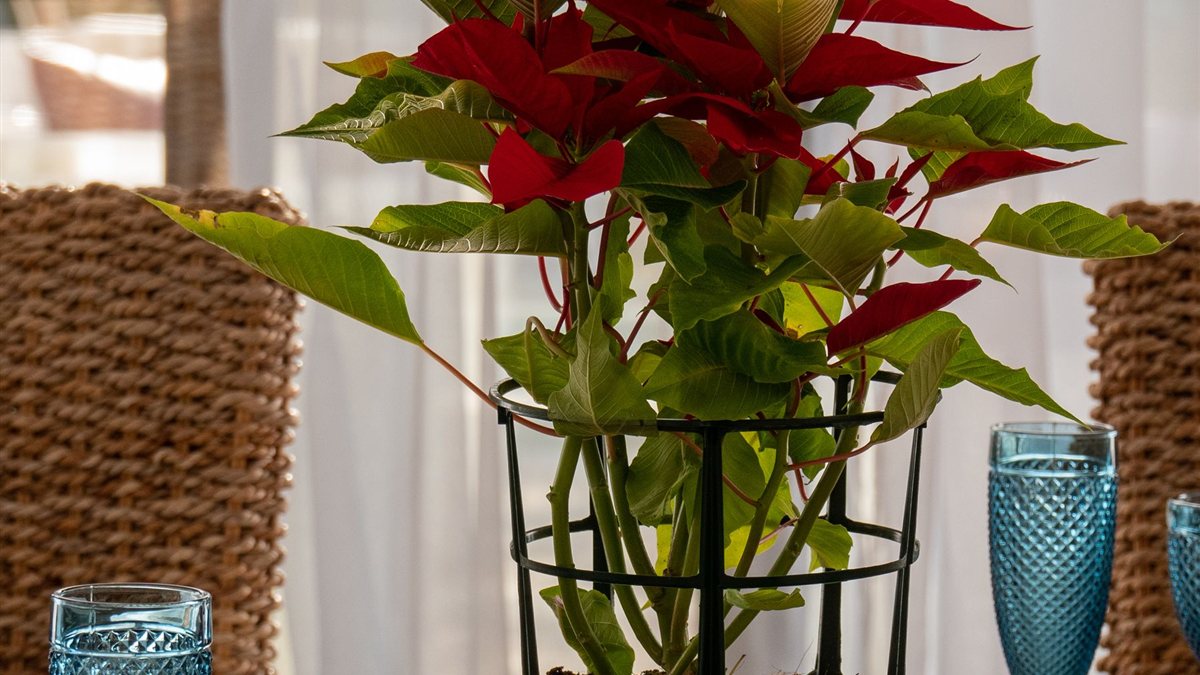
The wrapper changes where the water goes
The University of Minnesota Extension recommends removing the foil before watering a poinsettia and letting excess water drain. The useful distinction is between a pot that releases water and a display that lets you remove it.
Punching holes in foil may let water reach the furniture or saucer below. It does not remove the need to check what collects there. Our guide to pot drainage holes explains why the whole setup matters.
A quick check before the next drink
- Lift the nursery pot out of its sleeve or decorative container.
- Empty any standing water and inspect the bottom of the pot.
- Check the potting mix before watering again. A dry surface alone can hide moisture farther down.
- When water is needed, water over a sink, let the pot drain, and return it to the display without a puddle underneath.
A cover can go back on once drainage has finished. Make lifting the pot part of the routine rather than treating the wrapper as a permanent seal.
Leaf drop needs context
A wet cover is a clue, not a diagnosis for every fallen leaf. Cold exposure during the trip home, a draft, or a change in conditions can complicate the picture. Note when symptoms started before making several changes at once.
For light and placement beyond the wrapper, use our poinsettia care guide. The first fix here is smaller: give runoff a route out of the display.