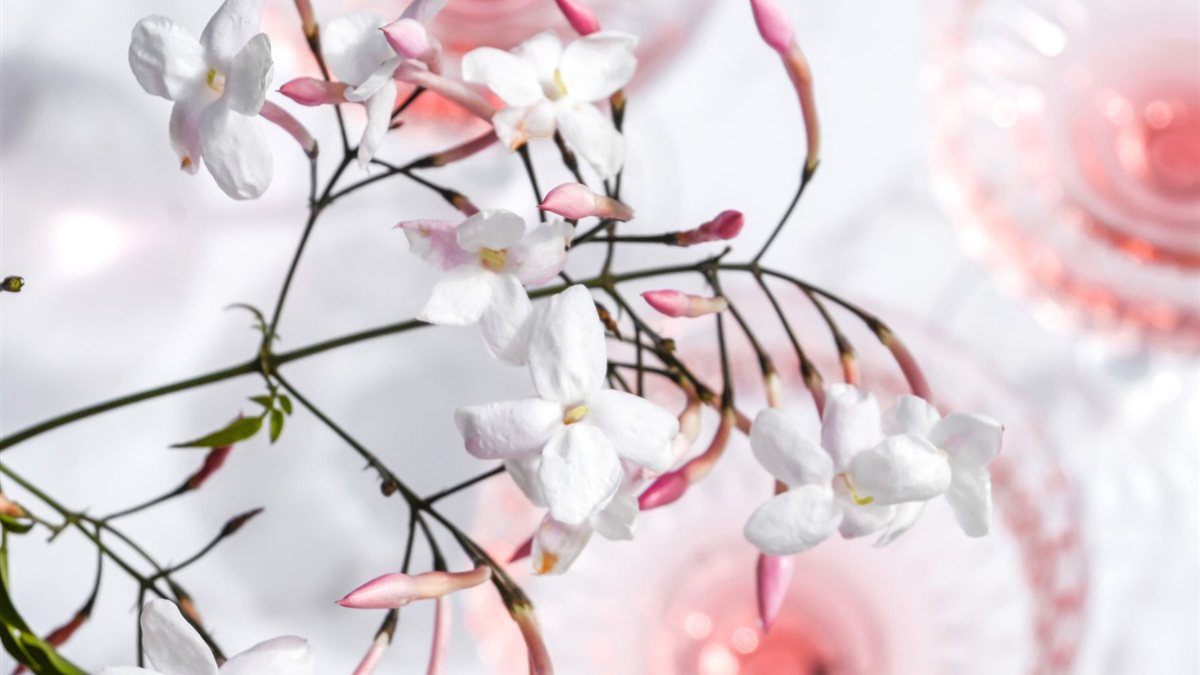
Your indoor jasmine has made plenty of green growth, but you are still waiting for the fragrant flowers. Before changing its feed, check what happens to the temperature around the pot after dark.
For Jasminum polyanthum, the many-flowered jasmine often sold for indoor growing, cooler nights help provide the conditions for bud formation. November is a useful time to review the spot you have chosen for winter.
Identify the jasmine, then check its nights
The RHS profile of Jasminum polyanthum describes daytime temperatures around 59–75°F (15–24°C), with cooler nights, and highlights the temperature drop for bud formation.
That is guidance for this jasmine, not every plant with “jasmine” on its label. Gardenia and winter-flowering outdoor jasmine are different plants with different routines.
Measure the temperature near the foliage overnight. A wall thermostat elsewhere in the house may not describe a windowsill behind a curtain.
Keep the cooler spot bright
A location can offer cooler nights and still provide daytime light. Do not solve a temperature question by leaving the plant in an unlit garage or beside an open window in freezing weather.
Our light guide helps compare candidate positions. The RHS recommends bright, indirect light for this indoor jasmine.
Look for stable conditions you can maintain for weeks, rather than carrying the pot between very different rooms every evening without checking what each location provides.
Recheck the pot after a move
Moving into a cooler position can change how fast the growing medium dries. Check moisture before watering, and avoid letting runoff stand around the roots.
Use our watering guide to review that routine. More water and fertilizer do not substitute for the seasonal conditions a plant needs.
Write down daytime and overnight readings beside the plant for several days. Those observations give you something concrete to adjust while the jasmine prepares for its next display.