Alocasias offer more than one version of the elephant-ear leaf. This selection includes compact, textured plants and larger specimens that need room to spread. Species, hybrids, and named cultivars appear together in shops, so check the label and expected mature size before choosing a plant for a shelf or floor display.


1. Dragon Scale: deeply patterned foliage

‘Dragon Scale’, commonly associated with Alocasia baginda, has strongly textured leaves with contrasting dark veins. It suits a foliage display where you can appreciate the surface pattern close up. The RHS profile describes compact growth and silvery-green foliage. Give it bright filtered light and an airy root zone rather than assuming its dramatic leaves require extra water every day.
2. Alocasia × amazonica: sharply contrasting veins

This cultivated hybrid has dark, arrow-shaped leaves with prominent pale veins and defined edges. ‘Polly’ is a familiar compact selection. ‘Ivory Coast’ is a separate cultivated name and should not be used as a synonym for every amazonica plant. Our amazonica and Polly guide covers the typical indoor growing requirements.
3. Alocasia cucullata: simpler green leaves

The green, heart-shaped foliage of Alocasia cucullata offers a quieter look than heavily veined selections. Allow for upright growth and basal offsets as it matures. Buy for the space you have rather than expecting frequent pruning to keep a large specimen permanently miniature. Leaf removal reduces the display; a suitably sized species is a better starting point for a small room.
4. Alocasia reversa: a contrasting central pattern

Alocasia reversa is grown for the contrast between its lighter leaf surface and darker central areas. It belongs in a display where the foliage is visible rather than crowded behind taller plants. Check moisture within its own pot before watering. The needs of another alocasia in the same room do not establish an identical watering interval for this one.
5. ‘Stingray’: leaves with a tail-like tip

‘Stingray’ is a named selection, often listed under Alocasia macrorrhizos, with a distinctive extended leaf tip. The species name alone does not mean every macrorrhizos plant has stingray-shaped leaves. Allow room for the leaf stalks and a stable pot as the plant grows. Choose this one for its silhouette, which is easiest to see against an uncluttered background.
6. Alocasia melo: thick, deeply textured leaves

Alocasia melo has a substantial, textured leaf surface in muted green to gray-green tones. The foliage can look sculpted even on a small specimen. Its thick leaves do not remove the need for careful root care. Use a draining container and check the medium rather than applying a fixed two- or three-day watering schedule. Persistent saturation can damage a small root system.
7. ‘Frydek’: green velvet and pale veins

Plants sold as ‘Frydek’ are valued for dark green, velvety foliage crossed by pale veins. The contrast is strongest when the leaves are healthy and unmarked. Keep them clear of repeated handling and scorching sun. Check undersides for pests when new damage appears, and avoid polishing the velvet surface with leaf shine or applying oil simply to change its appearance.
8. Alocasia cuprea: a metallic-looking surface

Alocasia cuprea brings a different finish, with rounded foliage whose metallic tones change with light and leaf maturity. ‘Red Secret’ is a familiar cultivated name. The color is not a promise that every mature leaf will become uniformly pink. Our cuprea care guide explains how to support the plant without forcing coloration through excessive sun.
9. Alocasia zebrina: the pattern is on the stalks

Alocasia zebrina stands out for its striped leaf stalks beneath relatively plain green blades. Leave enough visual space around it to show that feature. Support the plant with steady root moisture and a stable pot rather than tying every stalk rigidly upright. See our zebrina guide for light, watering, and troubleshooting.
10. Alocasia wentii: contrasting leaf undersides

Alocasia wentii is grown for broad green leaves with contrasting bronze-purple undersides. It can make a larger display than a compact jewel alocasia, so plan for its spread. Bright filtered light and warmth support indoor growth. Keep the leaves away from narrow walkways where they will be bent or torn, and assess the roots before choosing a larger container.
11. Alocasia odora: a larger green statement

The species Alocasia odora normally has large green foliage; variegation belongs to particular forms, not every plant. NParks describes a large upright perennial, so this is a choice for generous space rather than a tiny shelf. Confirm the variety and likely size before buying, especially when a young plant’s nursery pot makes it look deceptively compact.
Match care to the plant and the pot
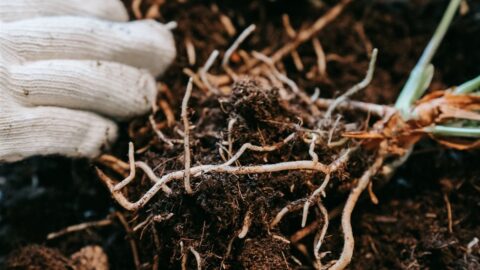
Provide suitable light, warmth, and a draining medium, then check moisture before watering. Adjust when growth slows. For propagation, use established offsets or appropriate corm divisions rather than assuming every detached leaf can make a plant. Our propagation guide explains the options. Inspect for mites and other pests; alocasias are not immune to infestations. Keep all of these ornamental plants away from chewing pets and children.