

Living Spanish moss hangs in silver-gray strands without a pot of soil. Tillandsia usneoides is an air plant in the bromeliad family, and its foliage takes up moisture. Growing it indoors means balancing thorough hydration with enough light and airflow for the strands to dry afterward.

Start with living Spanish moss
Buy a healthy, identified plant from a nursery. Dried, dyed, or preserved material sold for crafts is a different product and will not become a growing plant through soaking. Living strands should have firm tissue and active tips. Separate dead material gently so you can inspect the remaining plant, rather than pulling a tangled clump apart forcefully.
Find a bright position with moving air

Choose bright filtered light and protect a newly purchased plant from scorching exposure. A dim shelf can leave the strands declining even when watering seems adequate. Keep the plant away from heater outlets and cold glass. Outdoors, use a sheltered position suited to your local climate and bring a container-grown display under protection before damaging cold arrives. Our houseplant light guide helps assess a potential position.
Drape the strands loosely on a support
Use a branch, open basket, or other clean support that lets air reach the plant. Arrange loose curtains rather than a tightly packed ball with a wet center. Choose a holder you can remove or carry to a sink for watering. Keep the foliage clear of standing water and avoid trapping living tissue inside glue or a closed decorative container.
Wet the plant, then let it dry

Hydrate the living strands with suitable water, using a thorough rinse, dip, or soak as needed for their condition and your growing setup. Let excess water drain and return the plant to an airy position. Check that inner strands dry too. Adjust the interval to light, temperature, humidity, and drying speed. A brief surface mist may leave a dense clump inadequately hydrated; repeatedly wetting a slow-drying center creates a different problem. See our air-plant watering guide for practical methods.
Divide healthy strands to make another plant

The NC State Extension profile describes division as a propagation method. Separate a healthy length with growing tissue and drape it on another support. It does not need burying or a conventional rooting pot. Keep smaller pieces from drying severely while preserving airflow. The species produces small green flowers that can be easy to overlook among the gray foliage.
Feed lightly during active growth
Use a fertilizer suitable for Tillandsia or bromeliads according to its label. Account for the product’s strength and your water source, and avoid leaving concentrated residue on the foliage. Water from an aquarium or pond has unpredictable nutrient content, so it is not a dependable substitute for a planned feeding program. Reduce feeding when growth slows.
Check the interior when the display declines

Inspect browned tips, brittle sections, and a persistently wet center separately. Improve hydration for genuinely dry living tissue; improve drainage and airflow where strands remain wet. Remove dead portions with clean tools. Keep the display out of reach of animals that pull or swallow strings of foliage. For another compact air plant with a different shape, compare Tillandsia ionantha.
very useful information. thank you. Though mine looks dormant
Hi there,
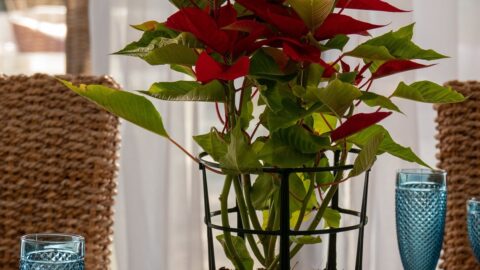
Could you tell me what type of plant is in the container on the windowsill with the Spanish Moss growing on it please? It looks lovely.
Thank you.
It really is lovely! It’s a Tillandsia xerographica, so also an air plant. Most places that carry air plants will have these. 🙂
Also tillandsia but a different species. Look for air plants they sell hem all over the place, often hotglued to a stick or shell.
My moss is brown, dies that mean its dead?
In most cases yes, although Spanish moss can go dormant due to cold!
Why does Spanish moss hriw predominantly on live oaks and. It water oaks
So, I had no idea either! But I just looked it up for you: “Basically, Spanish moss just needs somewhere to hang out, and live oak foliage leaches an especially high amount of the nutrients it needs“. Sounds like a pretty reasonable explanation to me! 🙂
HI, I’ve a question and hope you can advise, thanks. Should I cut the brown dried stems of Spanish moss?
Hi! You could do that, yes. That way more air flow reaches the rest of your Spanish moss 🙂