The yellow traps were catching plenty of insects. The problem was that more kept appearing. That was the frustration Reddit user u/ConstructionUnique36 brought to r/houseplants, along with a photograph of insect-covered sticky traps in a plant pot.
Their experience points to a gap in fungus gnat control: catching the adults does not remove the immature insects living in the potting mix.
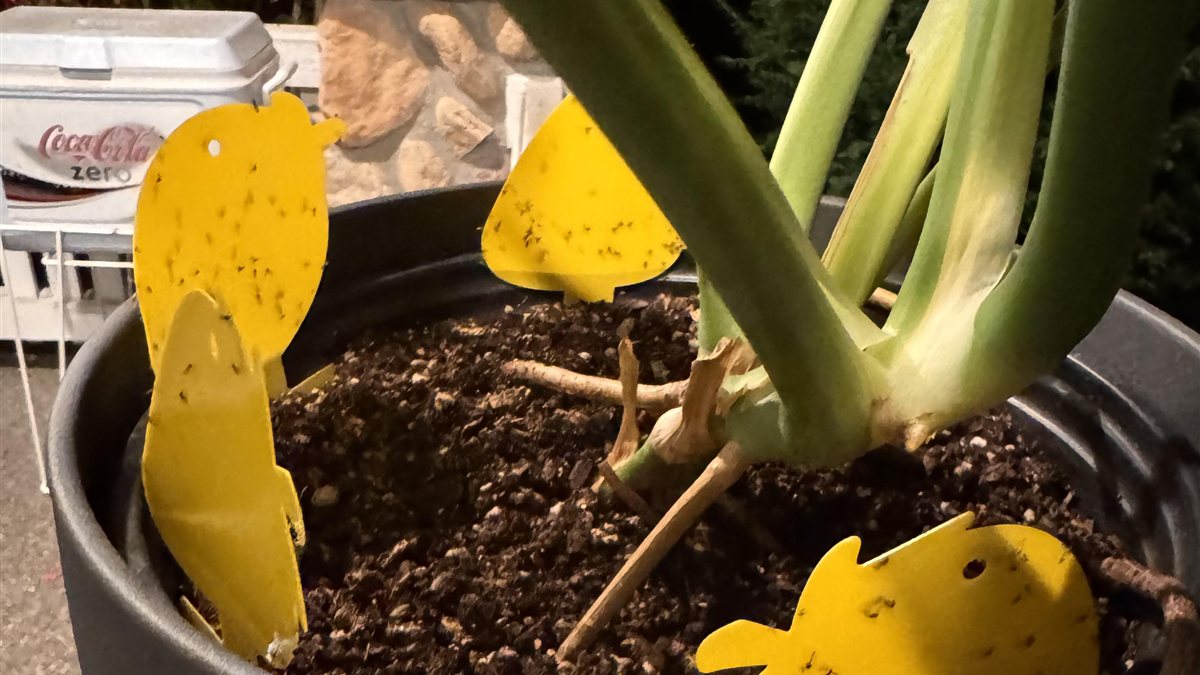
The traps were working. The infestation was not ending.
In the original post, the grower described a worsening fungus gnat problem in a Pacific Northwest home. They had tried yellow sticky traps and a product sold as a fungus gnat larvae killer, but still wanted to know what would break the cycle.
“Yellow sticky traps — they catch a ton, but new gnats keep appearing”
u/ConstructionUnique36, r/houseplants
The post does not establish why the larval treatment fell short, or whether it had enough time to work. There is no confirmed resolution to report. What it does show is why a full trap can feel like progress while the underlying problem continues.
The next flies may already be in the soil
Fungus gnats pass through egg, larval, pupal and adult stages. The University of California’s pest guidance explains that much of their life is spent in soil or organic matter, where a sticky card cannot reach them. Generations can overlap, so removing flying adults does not mean the pot is clear.
Keep the traps, but use them to monitor adults while addressing the growing medium. They help show where flies are active. They do not reveal how many larvae remain below the surface.
The comments focused on what the cards cannot catch
Replies suggested Bti products, beneficial nematodes and changes to watering. User u/glacial_eratic recommended “Beneficial nematodes”; other commenters described success with Bti. These are individual experiences, rather than proof that one dose or routine will work for every pot.
There is horticultural support for targeting larvae. University of Maryland Extension identifies Bacillus thuringiensis var. israelensis, or Bti, as the active ingredient in soil-drench products labeled for fungus gnat larvae on indoor plants.
UC also lists Steinernema feltiae nematodes as a biological control. These are living organisms with moisture and temperature requirements. Choose a product intended for the pest and setting, and follow its application instructions. Bti may need repeat applications; a Reddit comment’s mixing rate is not a substitute for the label.
Check the watering routine before adding another remedy
Virginia Tech’s guidance connects fungus gnat populations with wet growing media and decaying organic matter. It recommends examining houseplants for overwatering and letting the soil surface dry between waterings. Match that adjustment to the plant’s needs; drying an entire root ball to exhaustion is not the aim.
Check nearby pots as well as the one with the fullest card. Remove fallen plant debris and empty standing water from saucers. If water cannot escape, review the pot’s drainage. Our guide to watering mistakes can help you spot habits that keep the mix wet.
Replace crowded cards so new catches are easier to track, and record whether numbers fall as you follow the treatment plan. For this grower’s problem, the useful question is not how many gnats yesterday’s trap caught. It is whether the pots are still producing the next batch.