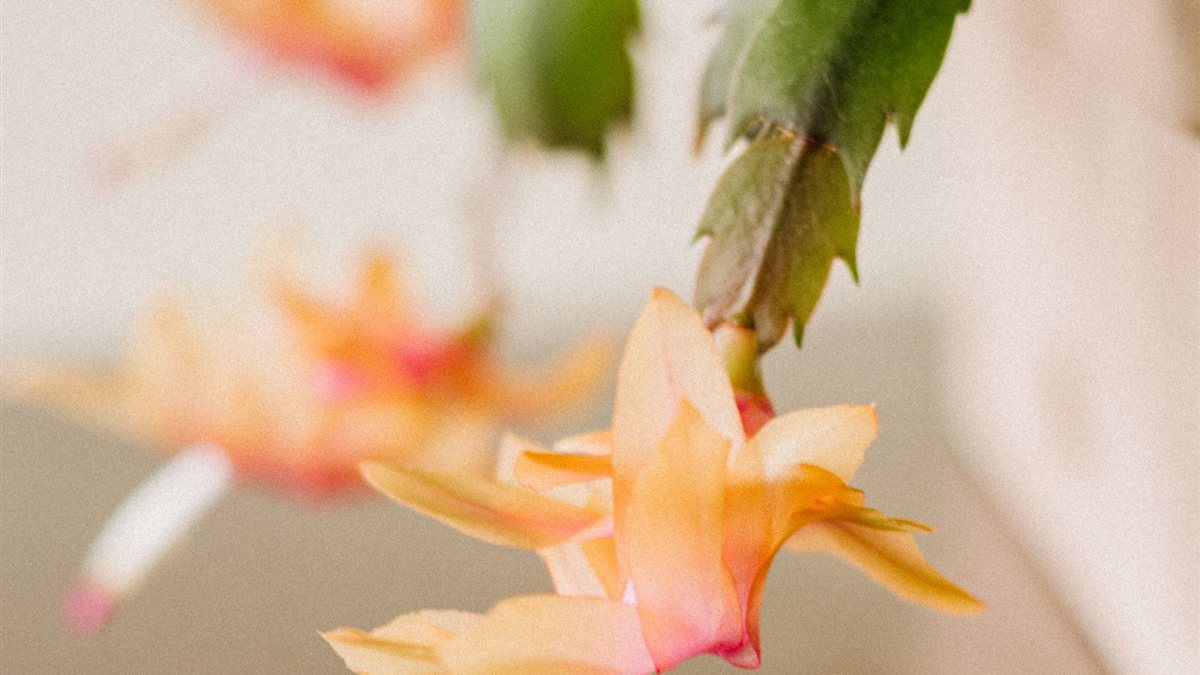
Your holiday cactus has healthy green stems, but the tips are still bare. Before buying a bloom booster, look at the room after sunset. A lamp left on beside the plant can interfere with the long nights that help it set buds.
Thanksgiving and Christmas cacti respond to the length of the dark period as well as temperature. More fertilizer cannot substitute for those conditions. That makes the evening location worth checking before you change everything else.
A living room can stay bright long after the sun goes down
Iowa State Extension recommends long, uninterrupted nights to encourage budding. Many cultivars need about 14–16 hours of darkness, although requirements vary. A plant beside a reading lamp may not receive the same night as one in an unused room.
Walk through the space at the time lights normally go on. Is the pot beside a floor lamp, kitchen counter or hallway light? Find a position that stays dark at night and has useful indirect daylight. Do not trade night lighting for a cold porch or a cupboard that stays shut all day.
Keep the daytime care steady
The November checklist at Tom’s Guide highlights darkness, temperature and watering together. The practical point is consistency: changing the plant’s location, feeding and watering in one afternoon makes the response harder to judge.
Holiday cacti come from forest habitats; they are not desert cacti that should stay bone-dry for weeks. Check the medium before watering and let excess drain. Our holiday cactus watering guide explains the balance between a soaked root ball and prolonged drought.
Once buds appear, stop chasing a better spot
Iowa State advises avoiding a new location until the first flowers begin to open. Buds can drop when growing conditions change. Once you have a suitable position, resist moving the pot between a warm display shelf and a cold window each day.
Use our Thanksgiving cactus guide to check the plant’s broader care. If the stems are limp or the roots are unhealthy, address that problem rather than treating darkness as a cure for everything.
Check the evening light, provide a consistent night, and give the plant time. Bare tips in early November are a reason to inspect the conditions, not a promise that a change today will produce flowers by a particular date.