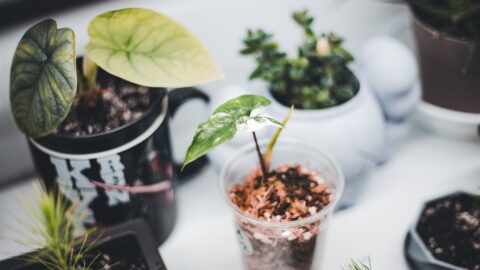
A north-facing window can suit foliage plants that dislike strong afternoon sun, but window direction is only a starting point. In the Northern Hemisphere, north windows generally receive less direct sun; in the Southern Hemisphere, the same direction can be a sunny exposure. Check the light reaching the leaves before choosing from these ten plants.
1. Snake plant

The upright leaves of Dracaena trifasciata, formerly Sansevieria trifasciata, fit a narrow sill or a floor pot beside the window. It tolerates lower light, although growth slows as light falls. Allow the mix to dry substantially before watering, especially in a cool room. Choose a compact cultivar if the sill has limited clearance; our snake plant guide shows the range of sizes and leaf patterns.
2. Chinese evergreen

Aglaonema brings broad leaves to a position with filtered light. Green forms and patterned hybrids differ, so do not assume every Chinese evergreen has yellow variegation or identical light requirements. Keep it away from cold glass and drafts, and water when the upper mix has begun to dry. Strongly colored selections may need a brighter position to maintain a good display. See our Chinese evergreen care guide for the basics.
3. Monstera

A bright north window can work for Monstera deliciosa when the plant sits close enough to receive useful daylight. A dim corner several feet away is a different growing environment. Give the climbing stems a support and allow room for broad adult leaves. Light, maturity, and overall health all influence leaf development; a north-facing label alone does not promise large, split foliage. Read our Monstera care guide before choosing a permanent spot.
4. Parlor palm

Chamaedorea elegans offers fine, arching foliage without needing a hot, sunny windowsill. Position it where the leaves receive bright, filtered daylight and have space to spread. Check the root zone before watering rather than keeping a cachepot full of runoff. Brown tips can reflect several stresses, including dry conditions or root trouble, so inspect the plant before increasing water. Our parlor palm guide covers placement and ongoing care.
5. Golden pothos

Pothos can trail from a shelf beside the window or climb a support. It tolerates modest light, but brighter indirect light generally gives a fuller plant and helps retain its patterned foliage. Let the upper mix dry before watering and prune long, bare stems if you want a denser pot. Rooted cuttings can fill gaps. Follow our pothos propagation instructions rather than planting detached leaves without stem nodes.
6. Maidenhair fern

The small leaflets of Adiantum look delicate because they are sensitive to drying. Keep the root ball evenly moist with good drainage, and protect it from hot vents and prolonged direct sun. This is a better choice for someone who checks plants often than for a frequently abandoned guest room. Higher room humidity can help, but brief misting does not replace watering the roots. Our maidenhair fern guide explains its particular needs.
7. Nerve plant

Fittonia has contrasting veins that remain visible without a large plant. Give it filtered daylight and a mix that retains moisture without remaining waterlogged. Its small root ball can dry quickly, and repeated dramatic wilting is a sign to adjust care rather than a desirable watering signal. A suitable terrarium can provide steadier humidity, although an enclosed display still needs attention to moisture and light. Use our nerve plant guide to plan the setup.
8. Moth orchid

Phalaenopsis can suit a bright north-facing window, especially where other exposures become hot. Flowering needs adequate light; a plant surviving in a dim spot may not rebloom well. Use an airy orchid medium and a container that drains, checking the medium and roots before watering. Avoid leaving water pooled in the crown. Our moth orchid guide covers the difference between maintaining leaves and supporting another flower spike.
9. Pinstripe calathea

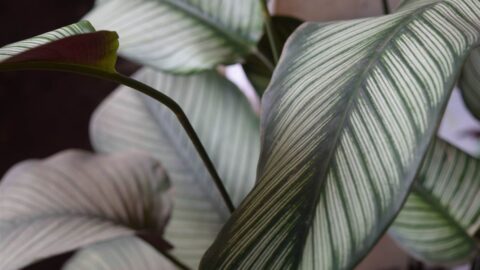
Calathea ornata is grown for the pale lines across its dark leaves. Filtered light protects that display, while cold drafts, dry air, and uneven root moisture can spoil the edges. Keep the medium lightly moist without letting the pot stand in water. It needs more consistent attention than snake plant or pothos. Check our pinstripe calathea guide if you are deciding whether your room suits it.
10. Never-never plant

Ctenanthe has patterned leaves and a similar preference for sheltered light and steady moisture. Keep it clear of harsh sun and heating or cooling outlets. Inspect the undersides of leaves for pests when new markings or damage appear; a pattern change is not always a light problem. Its moisture needs also make it a less forgiving choice for long absences than the thicker-leaved plants on this list.
Judge the window through the seasons
Trees, buildings, curtains, latitude, and distance from the glass can outweigh compass direction. Rotate a plant if growth leans strongly, and reassess when winter daylight falls. A grow light may be needed in a shaded room. The University of Maryland Extension lighting guide explains why light intensity and duration both matter. Our window placement guide helps translate that advice into a position at home.