

Yes. Monstera deliciosa is toxic to cats and dogs because chewing the plant can release irritating insoluble calcium oxalate crystals. Mouth pain, drooling, vomiting, and difficulty swallowing can follow. If a pet has chewed Monstera, contact a veterinarian or veterinary poison service rather than assuming a small bite will be harmless.

The toxic label is appropriate
The ASPCA entry for Monstera deliciosa lists toxicity to cats and dogs and identifies insoluble calcium oxalates as the cause. Irritation is the mechanism of injury, not a reason to dismiss the classification. The reaction depends on the exposure and animal, so a care article cannot promise the outcome.
How the crystals cause injury
Chewing or crushing plant tissue releases needle-like crystals that irritate the tissues they contact. This is different from the mechanism of true-lily poisoning in cats, but it can still require veterinary care. The Merck Veterinary Manual’s plant-toxicity guidance explains insoluble oxalate injury. Avoid using the unrelated fact that some kidney stones contain calcium oxalate to predict what will happen after a Monstera bite.
What to do after a pet chews the plant
Prevent further access and contact a veterinarian with the plant name, a photograph, the time of exposure, and any symptoms. Trouble breathing or swallowing, marked swelling, or severe distress needs urgent veterinary attention. Do not induce vomiting, give medication, or force water into the mouth unless a veterinary professional directs you. Do not wait for a second bite to decide whether the plant poses a risk.
Protect the pet and care for damaged foliage
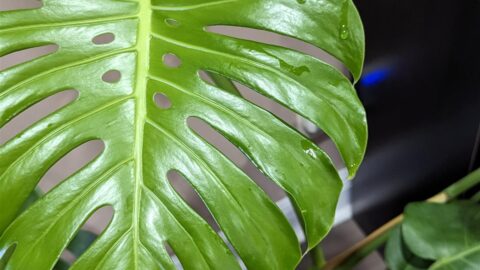
Place Monstera where the animal cannot reach leaves, stems, cuttings, or fallen material; an elevated pot may still be reachable by a climbing cat. Our guide to keeping cats away from plants offers placement ideas, while non-toxic plant options can help with alternatives. A torn leaf will not repair itself, but a lightly damaged plant can often keep growing. Attend to the animal first, then remove loose damaged material with clean tools.


This is terrible advice. Until you have a veterinary degree – do not give out veterinary advice. Calcium oxalate crystals are more than just a pain in the mouth. They can cause urinary crystals and kidney failure. You can’t live without working kidneys. So if you want your pet to slowly suffer over a few months going into acute renal failure and THEN die – go ahead and follow this advice.
ONLY EVER follow the ASPCA website for toxicity advice pertaining to dogs and cats.
Is it only “toxic” if ingested?
No, it causes skin irritation as well if you’re exposed to the sap (like from broken leaves and stems). Some folks with more sensitive skin may want to use gloves and long sleeves to avoid it touching their wrists while repotting, although I have to say that I haven’t had any reaction. 🙂
Thank you so much for this article. My heart sank when I woke up and found a bite taken out of my plant that was temporarily placed on a table where my sphynx cat got to it. She seems to be fine but I rinsed her mouth out and gave her water in a syringe as a precaution. I’ll be monitoring her through the day for sure.
Yikes! Don’t you just love it when they do that! I found my Monstera looking like someone had taken a hole puncher to it and it turned out my cockatiel had decided it was salad. He was fine, surely your kitty will be as well. 🙂
If a person has to go through the worry I think the best bet is to avoid monsteras. Unless you plan to keep it well out of reach, I just don’t see the purpose of causing unnecessary worry.
The point of the article is that it’s really not worth worrying too much over! I see people get really panicky over houseplants and pets but in the end, their toxicity tends to be overstated. Although keeping it out of reach is always a bonus, because even if your pets don’t suffer from an “attack”, the plant will!