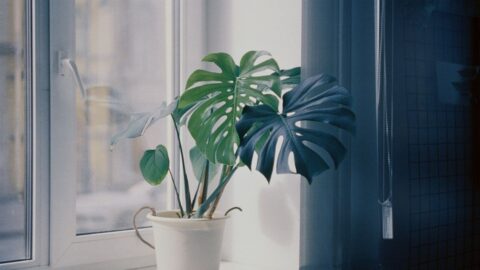
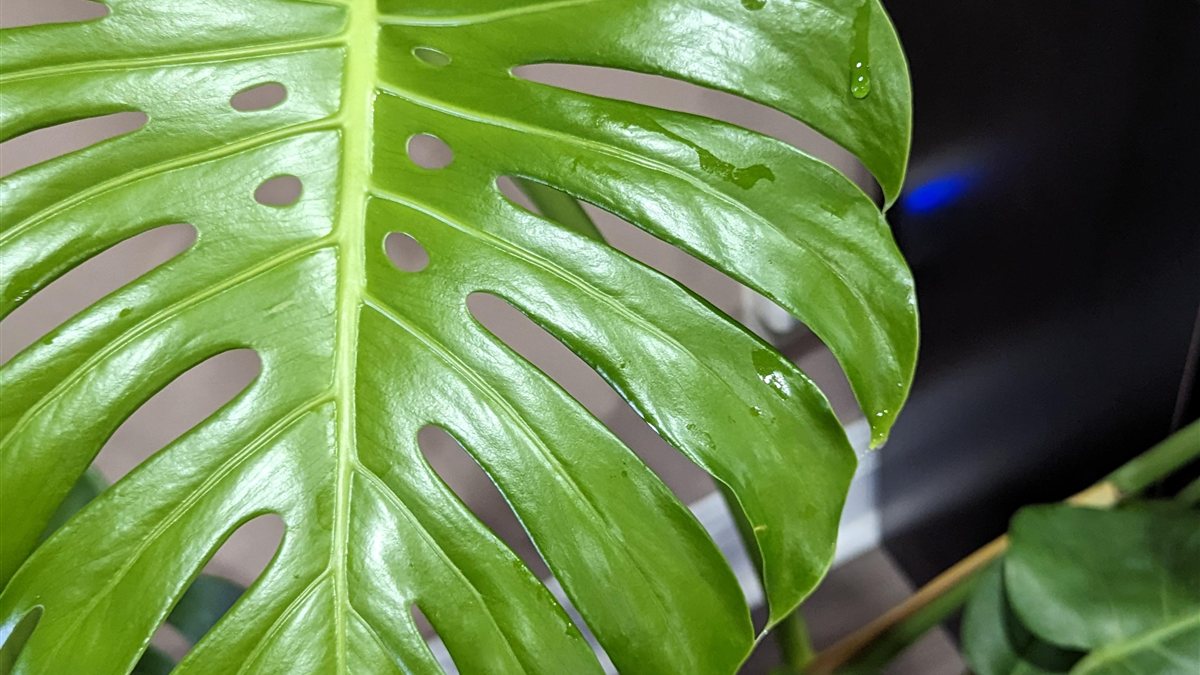
A Monstera kept producing water droplets, and its owner knew they had not come from a spray bottle. The leaves looked as though someone had misted them when nobody had.
Sharing a photograph in r/houseplants, u/ScienceAndNonsense asked about the unexpected moisture. After commenters mentioned guttation, the owner’s next question was the practical one:
“Neat! Does that mean I should be watering less?”
A leaf can release liquid
University of Missouri guidance describes guttation as liquid leaving through structures called hydathodes, often at leaf tips or margins. Root pressure can push that liquid out when conditions favor the process.
That is different from transpiration, which releases water vapor. It is also different from condensation collecting on a surface. Calling all three “sweating” hides distinctions that help explain where the droplets appear.
Repeated beads at the edges are consistent with guttation. A photograph does not prove the origin of every wet patch, so check for an overhead leak or water splashed from another pot if the pattern does not fit.
The watering question needs a soil check
Droplets alone do not tell you how wet the root zone remains. Before reducing or increasing water, check the growing medium and how the pot drains.
Our Monstera deliciosa care guide puts moisture checks in context. A pot that stays wet for a long time deserves investigation whether or not its leaves have droplets.
Use our watering mistakes guide to avoid replacing one fixed routine with another. The response to “my leaves have water on them” should not automatically be “stop watering.”
Do not taste the droplets
A plant’s exuded liquid should not be treated as drinking water. Keep it away from children and pets, and protect surfaces underneath a dripping leaf.
For this owner, the droplets opened a useful discussion about how plants move water. The next decision still belonged at the pot: check the roots’ conditions before changing their supply.