A Dendrobium drops leaves as the season changes, leaving a cane that looks unfinished beside the greener growth. Cutting it off would make the pot look tidier. First, check whether that cane is dead—or simply bare.
The plant’s name matters here. Dendrobium is a large group, and one winter routine does not fit every orchid carrying that label.
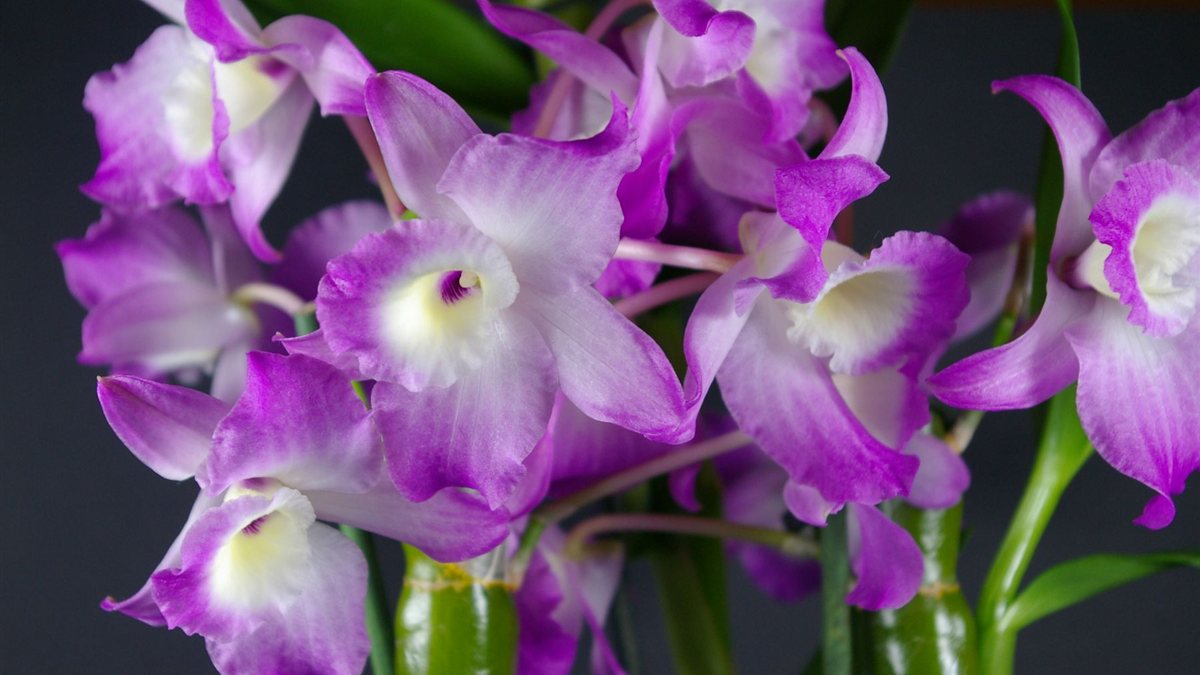
A bare cane can remain part of a living plant
For a nobile-type orchid, mature canes deserve inspection before pruning. The RHS profile of Dendrobium nobile ‘Virginale’ describes flowers arising from nodes on mature canes and advises against removing a whole cane unless it is completely shriveled.
That cultivar is an example of the group, not an identification of every orchid in a shop. Look for the full label, purchase record, or flowering photograph if you are unsure what you own.
Our Dendrobium group guide explains why identification comes before planning a winter rest.
Review the season without forcing a shutdown
The RHS guidance for that nobile cultivar calls for brighter, cooler autumn and winter conditions and reduced watering and feeding. Those changes should follow the plant’s growth stage and needs, rather than a command to stop all care on November 1.
Do not expose an unidentified orchid to cold, or leave it dry for weeks because another grower calls that a flowering trick.
For a closer reference, our Dendrobium nobile care guide distinguishes active growth from the seasonal rest.
Make a pruning decision you can explain
Inspect the cane for firmness, shriveling, softness, and decay. If tissue is deteriorating, investigate that problem rather than calling every change normal leaf loss.
Photograph a sound cane and leave it in place while you confirm the plant’s identity. Tidiness alone is not a reason to remove a structure that may still contribute to the orchid.
The November task is a pause before the scissors: identify the group, assess the cane, then choose the care it needs.