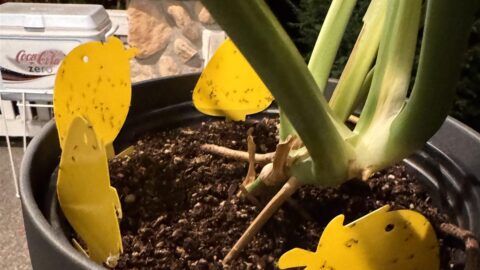
A new green shoot appears between your orchid’s leaves, and it is tempting to start counting down to flowers. But it could be a root. On a Phalaenopsis, or moth orchid, the first clue is the tip: rounded and smooth points to a root; flatter and notched points to a flower spike.
You do not need to touch the shoot to check. A closer look, followed by a few days of growth if the shape is unclear, can spare you a mistaken cut or an unnecessary change in care.
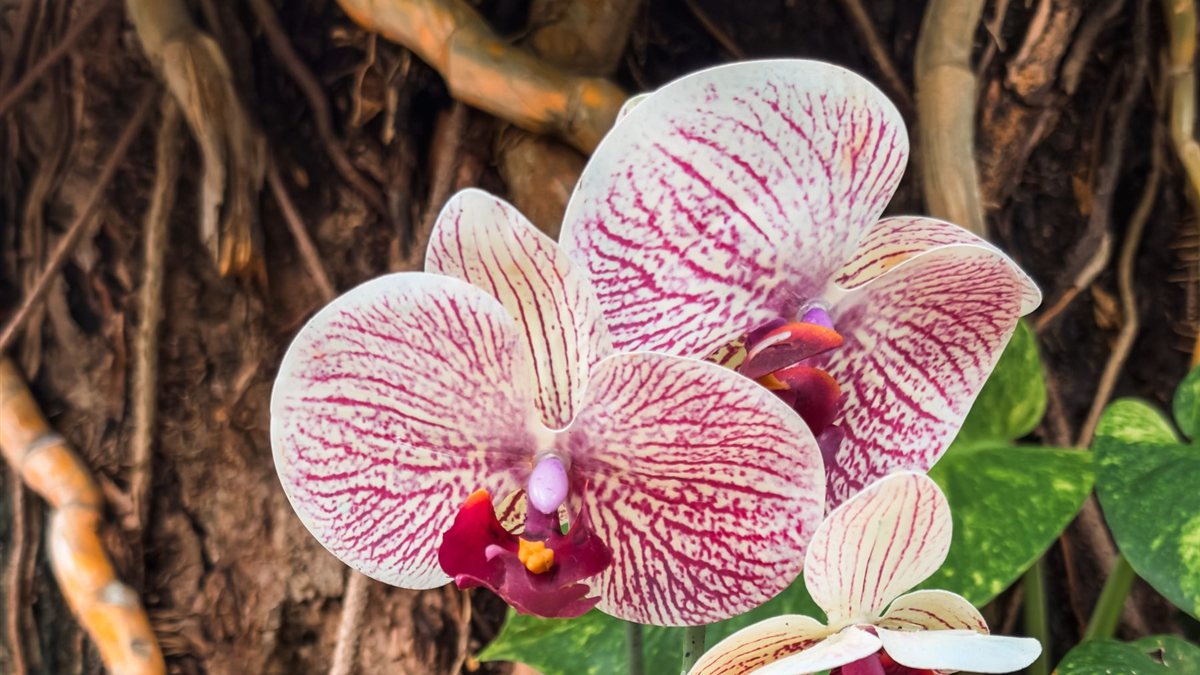
The shape matters more than the color
Both roots and flower spikes can start out green. A root grows as a smooth cylinder with a rounded tip. A young spike looks flatter, with a small notch that can give its end a mitten-like outline. The close-up photographs at Brooklyn Orchids show the two types of growth side by side.
As a spike lengthens, look for nodes: small joints along the stalk with triangular sheaths. The Orchid Society of Great Britain describes these features in its Phalaenopsis guidance. A root does not develop that sequence of joints and sheaths.
A silver covering is another root clue
The section behind a growing root tip can look silvery when dry. That surface is velamen, an absorbent covering that helps the root take up and hold water.
As the American Orchid Society explains, Orchid roots have two visible parts – the velamen and the root tip.
The tip’s color can vary, including green, pink or purple, so color alone is a poor identification test.
A new root is useful growth, even when you were hoping for flowers. Leave a healthy one intact, including an aerial root outside the pot. Do not cut it off to tidy the plant or bend it into the bark. Our Phalaenopsis care guide covers the conditions that support healthy roots and future blooms.
An unclear nub needs time, not extra water
If the growth is too small to identify, take a close-up photo and compare it with another once the shoot has lengthened. Leave the tip untouched. Do not squeeze it or peel back a sheath to get a better view.
Keep its growing conditions steady. The AOS care sheet recommends bright, filtered light and watering when the medium is nearly dry. Seeing a shoot does not mean the pot needs more water. Check the roots and potting mix before watering.
Small leaves on an old stalk point to a baby orchid
There is a third possibility if the growth is on an existing flower stalk. Small leaves followed by roots can signal a keiki, or baby orchid, rather than a flower bud. The AOS describes how these plantlets develop. Leave it attached while it grows; our orchid propagation guide explains when a keiki is ready for its own pot.