

Peace lilies grow glossy foliage and pale flower displays in a bright indoor position protected from scorching sun. Their tolerance of lower light does not mean they can grow in darkness. Match watering to the root environment and keep runoff from collecting around the pot.

Choose useful light for foliage and flowering

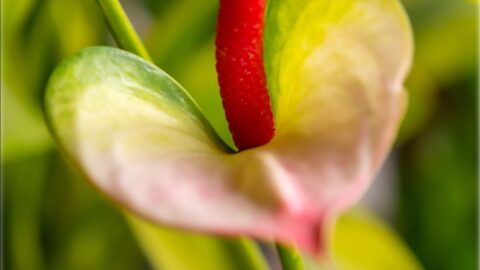
Place the plant near bright filtered daylight, or provide a suitable grow light where needed. A dim corner may slow growth and reduce flowering. Acclimate exposure changes gradually and protect foliage from intense heat against glass. The white display is a spathe surrounding a flower-bearing spadix. Green aging spathes can be normal and do not automatically call for fertilizer or a move into shade.
Keep room conditions steady
Comfortable warmth suits common Spathiphyllum hybrids. Avoid cold glass, drafts, and heater outlets. Measure humidity if the room is unusually dry and consider a humidifier with adequate airflow. A bathroom still needs useful light. Wipe dusty leaves gently with a damp cloth, supporting them as you work. Leaf-shine oils are unnecessary and do not solve poor growing conditions.
Maintain moisture without saturating the roots

Check the upper medium and pot weight, then water evenly as the mix begins to dry. Let excess escape and empty the outer container or saucer. Avoid repeatedly waiting for dramatic wilting as your only watering cue. A limp plant in wet medium may have root trouble rather than thirst. Our peace lily troubleshooting guide explains the checks before adding more water.
Repot when crowding or medium condition requires it

Use a draining pot and suitable open houseplant mix that retains some moisture. Increase size modestly and preserve sound roots when easing the plant from its container. Cut away a damaged nursery pot rather than tearing attached roots unnecessarily. Our repotting guide covers the process. Water culture is a separate growing method requiring root management and complete nutrition; see growing peace lily in water.
Divide complete rooted growing points

An established clump can be divided during suitable repotting work. Separate sections with healthy roots and viable growing points, using clean tools when necessary. Pot each division to fit its root system and keep conditions steady while it settles. A detached leaf is not a dependable way to produce another plant. Our peace lily propagation guide explains division in more detail.
Feed active growth and inspect changes
Use a suitable fertilizer according to its label and the nutrients already in the medium. Extra feeding cannot replace light or healthy roots. Brown tips, yellowing, and leaf loss can involve moisture stress, salts, exposure, or pests. Inspect leaf undersides and joints before treating. Flowering varies with cultivar, maturity, and growing conditions; a retail plant in bloom is not a promise of continuous flowers at home.
Keep peace lilies away from chewing pets

The ASPCA peace lily entry identifies insoluble calcium oxalates as the cause of irritation. Contact a veterinarian after a concerning exposure. Spathiphyllum is different from true lilies in the genus Lilium and daylilies in Hemerocallis, which present a serious kidney risk to cats. Our pet-friendly plant guide offers alternatives. Cover photo: © john on Adobe Stock.

Great info. Gives me some needed info. I’ve had my Peace Lily plant for about 10 years and have repotted it several times. Never had any problems. But in the past couple of months, I’ve found hundreds of little black dead bugs around the outside bottom of the pot. What would cause this and how do I stop it?
Yikes! Unfortunately I can’t really tell you what it is without seeing the bugs. Are they fungus gnats? You could try posting in the Houseplant Central FB group if you have Facebook, maybe with a photo I or one of the other members will be able to see what’s going on and how to stop it.
Really great article, both informative and well written. Thanks for the helpful tips!
I’m glad you think so, thanks for taking the time to comment!