A bird of paradise unfurls a broad green leaf, then a split appears between the veins. It spoils the smooth outline you expected. Before cutting off the entire leaf, check how much healthy tissue you would remove with it.
A tear does not automatically make a leaf useless. It also does not tell you, on its own, that the plant needs more fertilizer or water.
Separate a split blade from deteriorating tissue
Garden Guides notes that white bird of paradise leaves tend to split and tear. Contact, handling, and exposure can leave a broad leaf with a less-than-perfect outline.
A stable split through otherwise green tissue is different from a widening soft patch or discoloration that keeps spreading. Examine the edge and compare photographs over time before deciding which situation you have.
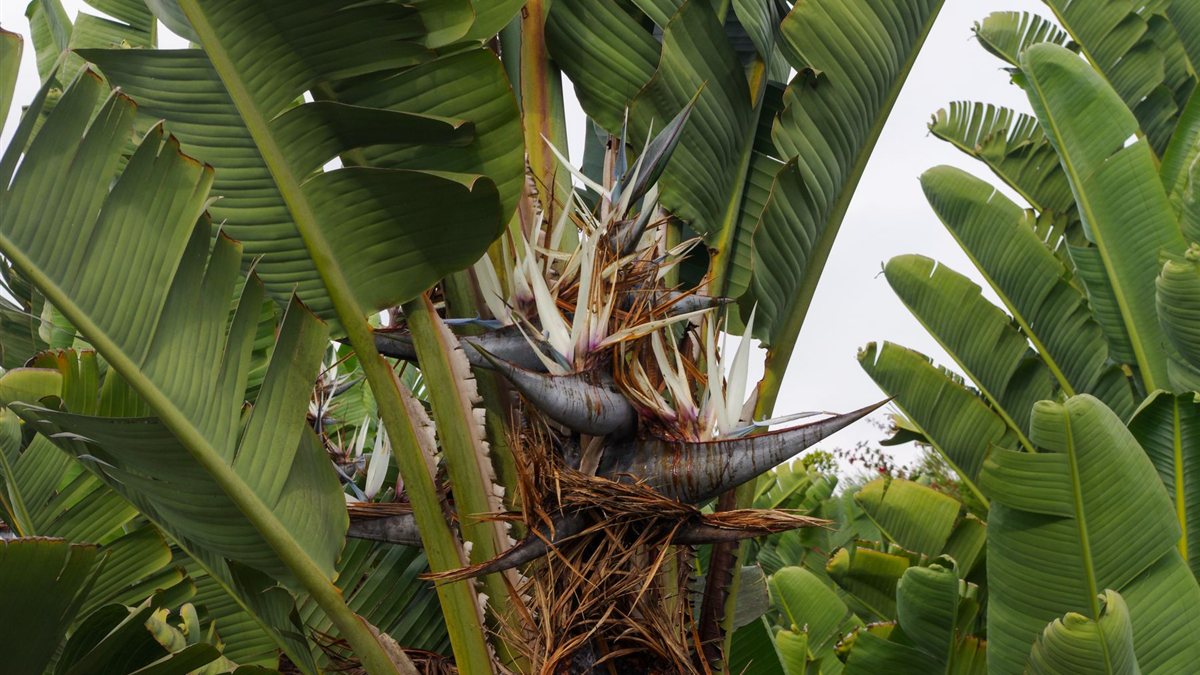
Our bird of paradise care guide covers the wider growing conditions. The photograph here shows a large outdoor plant; it is not evidence that an indoor specimen needs the same amount of water.
Check what brushes against the leaves
Look at the plant’s route through the room. A doorway, curtain, pet, or frequently used chair may contact the same leaf. Give new foliage room to unfurl without being caught against furniture.
Do not tape the blade together or trim every split into a fresh cut. The existing tear will not knit back into a seamless leaf.
If you see other symptoms, review placement as well. Our explanation of direct and indirect light can help assess a recent move.
Prune for a reason beyond a perfect silhouette
Dead, decaying, or badly damaged foliage may need removal. Use clean tools and avoid injuring adjacent stalks when a cut is warranted.
For context on the group, Wisconsin Extension’s bird of paradise guide discusses growing and maintaining Strelitzia reginae, a related species rather than the giant white bird of paradise pictured.
A green leaf with a few stable splits can stay while you improve the space around it. A clean outline is an aesthetic preference, not a diagnosis.