Golden pothos, Epipremnum aureum, is adaptable, but a dim corner and an automatic eight-day watering routine can still leave it sparse or struggling. Give the growing tips useful light, check the root zone, and prune or propagate healthy stems when you want a fuller pot.

Know which plant is sold as pothos
North Carolina Extension identifies Epipremnum aureum as a Society Islands native. Golden pothos usually has green leaves with yellow patterning, while cultivated forms vary. Common names such as money plant can refer to unrelated species. Compare the leaf stalk and new growth if confused with philodendron; our identification guide explains the clues.
Marble Queen: white-and-green marbling
Marble Queen carries cream or white marbling against green. Give it useful indirect light without suddenly exposing shaded leaves to harsh sun. A highly pale plant has less green tissue supporting growth, so assess root health and actual foliage before buying. Our Marble Queen guide covers this form.
Pearls and Jade: check the actual pattern
Pearls and Jade has patterned foliage that differs from golden pothos. Do not describe low light as its ideal simply because the species tolerates shade. Ask for the actual cultivar identification where labels overlap. Our pothos variety guide compares familiar forms.
Neon: chartreuse foliage still needs light
Neon is selected for bright yellow-green leaves. Leaf age and exposure affect its appearance. It does not need a special low-light rule merely because it lacks golden pothos’s mottling. Support healthy growth with bright indirect light and protect from abrupt harsh sun.
Satin pothos belongs to a different genus
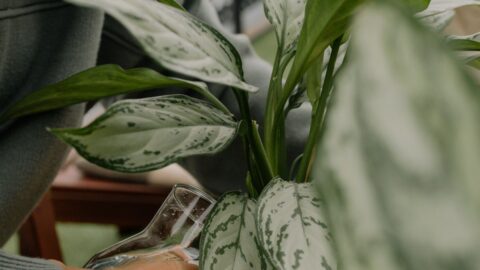
The silver-blotched plant commonly sold as satin or silver pothos is usually Scindapsus pictus, not a cultivar of Epipremnum aureum. North Carolina Extension’s Scindapsus profile explains its identity. Similar common names should not be used as proof that every plant has identical roots, growth, or care.
Choose a trailing or climbing route
A hanging pot shows cascading vines, while a stable trellis or pole allows climbing. Keep tips from disappearing behind furniture or attaching to surfaces you need to protect. Tie the main stem loosely if using a support. A climbing plant may change leaf size as it develops, but support alone cannot compensate for poor light.
Use bright indirect light for stronger growth
Pothos can survive in lower light, but slower growth and reduced patterning may follow. Hours alone do not measure exposure; window direction, shading, and distance matter. A grow light can supplement weak daylight. Our light guide explains the assessment. Choose pothos for its foliage rather than a practical household air-purification promise.
Use a draining, moisture-retentive mix
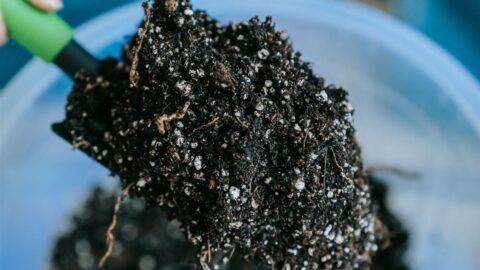
Choose a pot with drainage holes and a dependable houseplant mix with air space around roots. Coarse amendments may help where the base mix remains dense. Activated charcoal is not a general filter that makes harmful irrigation chemicals disappear inside a pot. Worm castings are optional and do not establish a complete fertilizer plan.
Repot when roots or mix need attention
Inspect if roots densely fill the container, drying becomes unusually fast, or the mix no longer wets and drains well. Drooping alone does not establish that a plant is potbound. Move into a modestly larger draining pot when needed and preserve healthy roots. Our repotting guide covers the checks.
Keep warmth steady and assess dry air
Avoid cold drafts, cold glass, and hot vents. Typical indoor humidity can suit pothos; measure before adding equipment. Misting does not provide lasting room-humidity control. Brown tips need a broader check of moisture, roots, fertilizer salts, and exposure rather than an automatic chlorine diagnosis.
Feed active growth modestly
Use houseplant fertilizer according to its label, accounting for nutrients in fresh mix. A pothos-specific product is not essential. Reduce feed when growth slows or roots are struggling. Extra fertilizer will not repair stretched old stems, replace insufficient light, or make dead leaf tissue green.
Check the mix before watering
Let the upper mix dry, then water thoroughly and drain, avoiding prolonged saturation and repeated severe drying. Compare pot weight and feel below the surface. An eight-day interval cannot suit every pot and room. Tap water works for many plants; investigate actual quality concerns rather than banning it universally. Our watering checks explain the variables.
Prune and root cuttings to improve fullness
Shorten a healthy vine with clean tools, leaving viable nodes on the parent. Rooted cuttings can be added to a sparse pot once established. Do not pack many unrooted stems into a large wet container. A leaf alone is insufficient: retain a viable stem node and growth point. Our pothos propagation guide covers water and medium methods.
Monitor cuttings rather than promising a rooting date
Keep leaves above water when water-rooting and refresh the water regularly. In propagation medium, maintain light moisture without saturation. Provide warmth and bright indirect light and inspect for decay. Transfer established roots into a small draining pot if soil growing is the goal. New growth does not always mean a robust root system is already present.
Investigate pests, spots, and yellowing before treatment
Look for scale, mites, and mealybugs. Isolate an affected plant and follow a labeled treatment for the identified pest. Persistent wilting in wet mix calls for root inspection. Expanding lesions may need diagnosis; fungicide does not treat every cause of a brown patch. Keep pothos and cuttings away from pets and children who may chew them because of irritating calcium oxalate crystals.