A lemon tree comes indoors for winter, loses a few leaves, and seems to stall. Reaching for citrus fertilizer is tempting when the plant looked stronger outside.
Before feeding, compare the conditions it has now with those it left behind. A bright room can still provide much less light than an outdoor growing spot.
Assess the light at the leaves
University of Minnesota Extension says indoor citrus needs some direct sun during the day and describes gradually acclimating plants to lower light before bringing them inside.
Check the tree’s distance from the window, any blinds or nearby shading, and how long sunlight actually reaches the foliage. Do not judge the position from the brightness of the ceiling light at night.
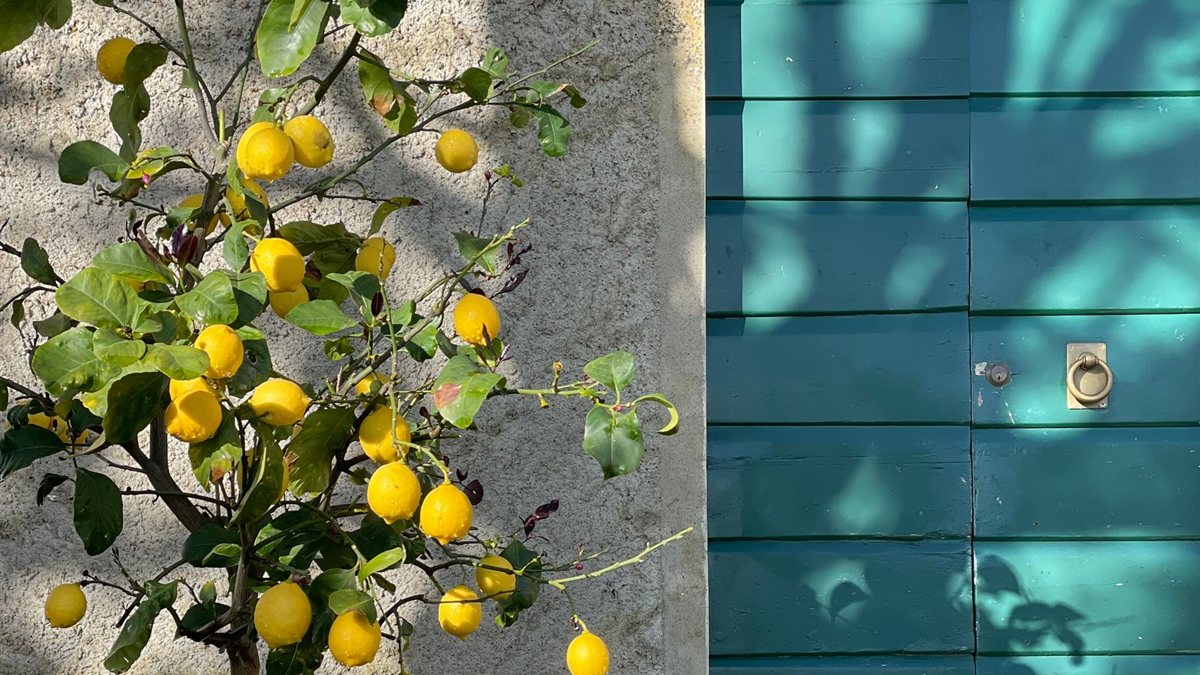
Our lemon tree care guide covers container growing and the winter plan. The fruiting outdoor tree pictured illustrates the plant; that display is not a promise for a winter room.
Do not assume leaf loss identifies a nutrient shortage
Inspect the remaining leaves, stems, and growing medium. Note when the tree moved and whether it now sits beside a radiator or drafty door.
Check for pests, including the undersides of leaves and stem joints, rather than attributing every change to the season. A symptom can have more than one possible cause.
Minnesota’s guidance links fertilizing to active growth. Adding more nutrients cannot replace suitable light or restore a waterlogged root zone.
Recheck watering after the move
The old outdoor interval may not fit the indoor pot. Check moisture before watering, and let excess drain instead of leaving it in the cover.
Our explanation of direct and indirect light helps with the placement decision. If you use supplemental lighting, assess the light reaching the canopy, not just whether the lamp is on.
Record new growth, leaf loss, and moisture checks over the next few weeks. Those observations give you a basis for feeding decisions once the tree has an indoor setup that supports it.