A night garden can combine flowers that open near dusk, plants whose fragrance becomes stronger in the evening, and pale blooms that remain visible after sunset. Those are different qualities: a white flower does not automatically bloom only at night. These ten plants show how to build an evening display while matching each choice to its climate and growing space.

1. Moonflower vine

Ipomoea alba is a climbing morning-glory relative with large pale flowers that open in the evening. Give it sun, suitable warmth, and a strong support. In cold climates it is often grown seasonally. The common name moonflower is also used for Datura, so check the botanical label. Do not describe either name as a blanket assurance of edibility or pet safety. Our moonflower guide covers the vine.
2. Common evening primrose

Oenothera biennis opens yellow flowers toward evening and can support night-flying moths. It usually forms a leaf rosette before producing tall flowering stems in its second year. Plant it outdoors with room to grow, and manage self-sown seedlings where needed. It is a wildflower for a suitable border, not a compact indoor flowering plant. See our evening primrose growing guide.
3. ‘Casa Blanca’ lily

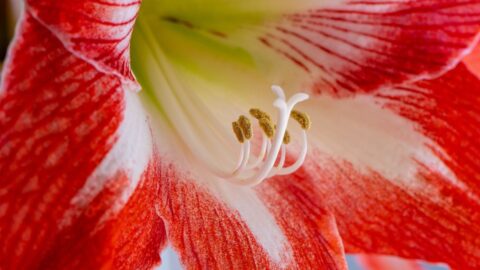
Lilium ‘Casa Blanca’ is an Oriental lily with large fragrant white flowers. Its pale petals stand out after dusk, but it is not an exclusively night-opening flower and does not produce its own light. Choose a suitable bright garden position and support stems if necessary. True lilies present a serious hazard to cats, including exposure to pollen; the FDA’s lily guidance explains why households with cats should choose another display.
4. Datura

Datura species have upright trumpet-shaped flowers, often opening toward evening. Datura stramonium is also a vigorous weed, so it should not be presented as an uncomplicated ornamental for every garden. All parts can be dangerously poisonous if eaten. Identify the species and consider whether a toxic, self-seeding plant belongs in the site at all, particularly where children, pets, or livestock have access.
5. Brugmansia

Brugmansia produces large hanging trumpets on a woody shrub or small tree. Many selections have a strong evening fragrance. These are substantial, frost-sensitive plants that may need feeding, watering, and winter shelter; they are not small, carefree annuals. All parts are poisonous if eaten. NC Cooperative Extension compares Datura and Brugmansia, including their contrasting flower orientation and placement concerns.
6. Tuberose

Agave amica, widely sold as Polianthes tuberosa, carries waxy pale flowers on upright stalks. Its strong evening scent makes it useful near a seating area. Give it a warm, bright growing season and suitable drainage; it is not a low-light plant. Its flowers also remain visible by day. Our tuberose guide explains seasonal growth and winter protection.
7. Foamflower

Tiarella adds small, frothy pale flower spikes to a shaded woodland planting. It can contribute a light-colored spring display near an evening path, but it is not a specialized night bloomer. Moist, well-drained soil and shade are more useful targets than treating it like a tropical houseplant. Read our Tiarella cordifolia guide before choosing it for a dry or exposed location.
8. Mock orange

Philadelphus shrubs produce pale flowers, often with an orange-blossom-like scent. Flowers can be enjoyed in daylight and evening; the genus does not bloom only after dark. Choose a cultivar for mature size and fragrance, and prune at the correct time to retain its flowering wood. Our mock orange guide covers this deciduous garden shrub.
9. Four o’clocks

Mirabilis jalapa opens flowers in the later part of the day and into the evening. It is a tender perennial often grown as an annual where winters freeze, with flowers in several colors. Give it a suitably sunny site and manage unwanted seedlings. The clock time is approximate and responds to conditions, rather than a promise that every flower opens at precisely 4 p.m. Keep ornamental plant parts and seeds out of reach of children and chewing pets.
10. Scented flowering tobacco

Nicotiana alata and other scented selections can perfume an evening border. Choose the species or cultivar carefully: compact bedding hybrids may have less scent and flowers that stay open during the day. NC State Extension’s Nicotiana alata profile explains that difference. Ornamental tobacco is not pet food; do not allow animals to eat the foliage.
Design around light, scent, and the actual site
Place a few fragrant plants near a place you use in the evening rather than crowding every scented species together. Keep paths clear and allow each plant its mature space. Pale flowers reflect available light; they do not glow through bioluminescence. A moon garden still needs the right daytime growing conditions, and deep shade does not suit every plant simply because its flowers open late.
Leave room for nighttime visitors
Moths and other insects may visit flowers after dusk. Avoid routine pesticide spraying and unnecessary bright lighting around the planting. Provide seasonal variety instead of expecting one plant to flower all year. For additional structure and scent, compare our flowering shrub guide, then choose species that suit local hardiness, moisture, and space.