An orchid that has finished flowering is not necessarily dying or entering dormancy. Keep caring for its leaves and roots, then decide what to do with the spent flower spike. The right cut depends on the kind of orchid and whether the spike is still alive; the familiar three options apply mainly to common moth orchids, Phalaenopsis.

Identify the orchid before cutting the spike
Many orchids bloom once from a particular spike, while some can flower again from a living one. The American Orchid Society’s spike-pruning guide explains the differences. Do not cut an orchid’s leafy cane or pseudobulb simply because its flowers have faded; those structures may remain useful. If your plant is a moth orchid, our Phalaenopsis guide covers its basic growth.
Option 1: leave a healthy green Phalaenopsis spike

A firm, green spike may continue flowering or develop a branch, although the response is not guaranteed. Leaving it is a reasonable choice for a healthy plant if you do not mind its appearance. Some novelty Phalaenopsis flower repeatedly from the tips of living spikes, making premature cutting particularly unhelpful. Inspect the type of plant and spike instead of assuming every spent stem must immediately be shortened.
Option 2: cut above an unused node on a suitable plant

For many common large-flowered Phalaenopsis hybrids, a cut just above a healthy unused node can encourage a secondary branch. Use clean, sharp tools and leave a small margin above the node. This does not guarantee a faster or larger display, and a weak plant may benefit from concentrating on roots and leaves instead. Avoid repeatedly forcing additional flowers from a plant with a poor root system.
Option 3: remove a spent or drying spike
A fully brown, dry spike will not become green again and can be removed near its base without damaging the crown, roots, or leaves. Removing a spent spike is also an option on a common Phalaenopsis when you prefer to let the plant build strength for a new cycle. A naturally drying spike is not automatically infected. Keep the blade clear of nearby aerial roots, which can still be alive and functional.
Continue watering by the medium and roots

After flowering, check the growing medium rather than following a fixed weekly soak or watering only because the surface looks dry. Bark, moss, pot size, and room conditions change drying speed. Water thoroughly when needed, drain the container, and avoid pooled water in the crown. Our orchid watering guide explains the checks. Ending flowering does not mean every orchid should be left dry.
Maintain useful light and appropriate nutrition
A common moth orchid needs bright, filtered light to support the next growth cycle. Keep it away from harsh sun and temperature extremes. Use a suitable fertilizer as directed, accounting for the plant’s growth and existing medium. More feed is not a shortcut to a new spike. If the plant declines, our orchid troubleshooting guide helps assess roots and conditions before adding treatments.
Repot when the medium or roots justify it
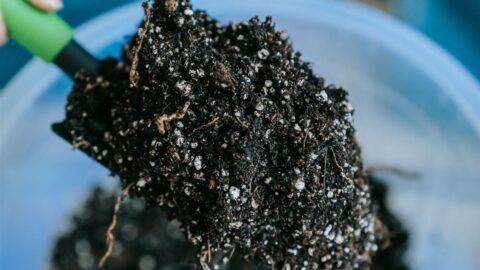
The period after flowering can be convenient for repotting a Phalaenopsis, especially when fresh root growth is beginning. Do not change pots merely because the last flower has fallen if the medium and roots are healthy. Degraded bark, a saturated root mass, or clear crowding may justify attention. Use our orchid repotting guide for an appropriate medium and gentle root handling.
Wait for growth rather than promising next spring
Reblooming time varies with the orchid, maturity, health, light, and temperature pattern. A healthy plant may develop new leaves or roots before producing another flower spike. Buds falling prematurely during an active display are a different problem from flowers fading at the end of their lifespan. Keep a stable routine and assess the plant as a whole instead of using one bloom duration or one season as a rule for the entire orchid family.