Anthurium clarinervium is grown for thick, heart-shaped leaves with pale veins against a dark, velvety surface. Give this Mexican species filtered light, an airy root zone, and consistent care. Its compact growth is different from the long climbing vines of many familiar aroids, and its leaves need room to expand without rubbing against nearby objects.

Grow it for foliage rather than showy flowers
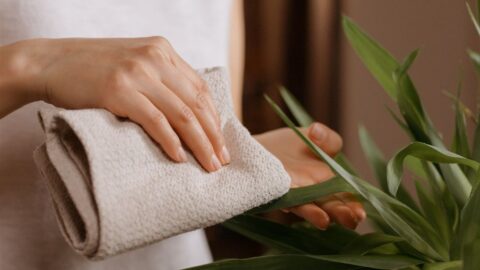
The velvet cardboard nickname describes the leaf texture. New leaves develop and harden before taking on their mature appearance, so avoid handling or rubbing them while they are soft. The flowers are less conspicuous than the foliage. Singapore’s National Parks Board records the species in Araceae and highlights its ornamental leaves. Do not assume a seller’s dark-form label guarantees a formally distinct cultivar or a fixed mature size.
Maintain useful light through winter
Choose bright, filtered daylight with protection from prolonged harsh sun. An ordinary bathroom is suitable only if it supplies enough light and a practical growing position. Do not deliberately reduce light in winter when natural daylight is already falling. Adjust placement or use a suitable grow light if needed. Our light guide explains how exposure changes with the room and season.
Water after partial drying, not on a weekly deadline

Check the medium below the surface and lift the pot if possible. Water when the root zone has begun drying, then let the excess drain. Avoid both prolonged saturation and repeated drying until the whole plant wilts. A statement such as 90 percent dry is not a practical measurement from touching only the surface. Our container watering guide covers checking moisture through the root ball.
Keep air around the roots
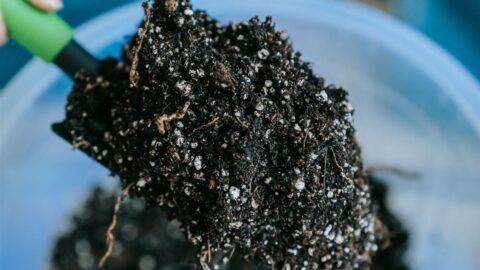
Use a structured potting medium that retains some moisture while draining well. Bark, perlite, and suitable moisture-holding components can be useful, but adding many ingredients does not automatically improve a mix. Avoid fine material that compacts and oversized pots that stay wet around a small root system. The RHS anthurium guide covers general indoor growing conditions; adjust the setup to the plant and how quickly it dries in your room.
Provide steady warmth and manage dry air

Keep the plant away from cold drafts, freezing glass, and direct heater or air-conditioner blasts. Moderate to higher humidity can support good leaf development, but a fixed 50 percent cutoff is not an instant boundary between a healthy and dying plant. Measure the room if dry air is a concern and consider a humidifier. Maintain airflow, particularly in cabinets or crowded displays, rather than keeping leaves continually wet.
Feed according to growth and the existing medium
Use a suitable houseplant fertilizer when active growth and the potting mix justify it, following the product’s directions. A universal fortnightly half-strength dose does not account for different formulations or an already fertilized medium. Do not feed stressed, damaged roots to force a recovery. Remove clearly dead leaves with clean tools, but retain healthy foliage and avoid cutting an emerging leaf to make the plant look tidier.
Repot when the roots or medium need attention
Inspect for crowding, a deteriorated medium, or drainage problems rather than repotting automatically every two years. Support the root ball when easing it out and avoid pulling on leaves. A flexible nursery pot can be cut away if it is trapping roots; breaking a ceramic container is not a routine requirement. Our repotting guide explains container size and gentle root handling.
Use a viable growing section for propagation

Division of a healthy plant with established growing sections is a practical option. Each division needs viable growth and roots; a loose leaf alone is not a dependable way to produce a complete new plant. Stem propagation requires suitable stem tissue with a growth point, not simply a leaf stalk. Seed propagation needs viable seed and is a different project. Keep the parent healthy rather than dividing a small or declining plant into many weak pieces.
Inspect pests and keep foliage away from chewing pets
Check leaf undersides and stems for scale, mealybugs, and mites. Isolate an affected plant before using an appropriate labeled treatment. Yellowing or brown edges can reflect several conditions, so assess roots, moisture, and exposure before spraying. Our mealybug guide helps identify cottony deposits. Like other anthuriums, this plant contains irritating calcium oxalates; keep it out of reach of pets and children that may chew it.