An alocasia loses one leaf, then another, until the pot appears empty. It is easy to assume there is nothing left to save. Yet the visible leaves are only part of the plant.
A seasonal pause is one possible explanation. It is not a diagnosis to apply to every leafless alocasia, especially one whose roots have stayed wet.
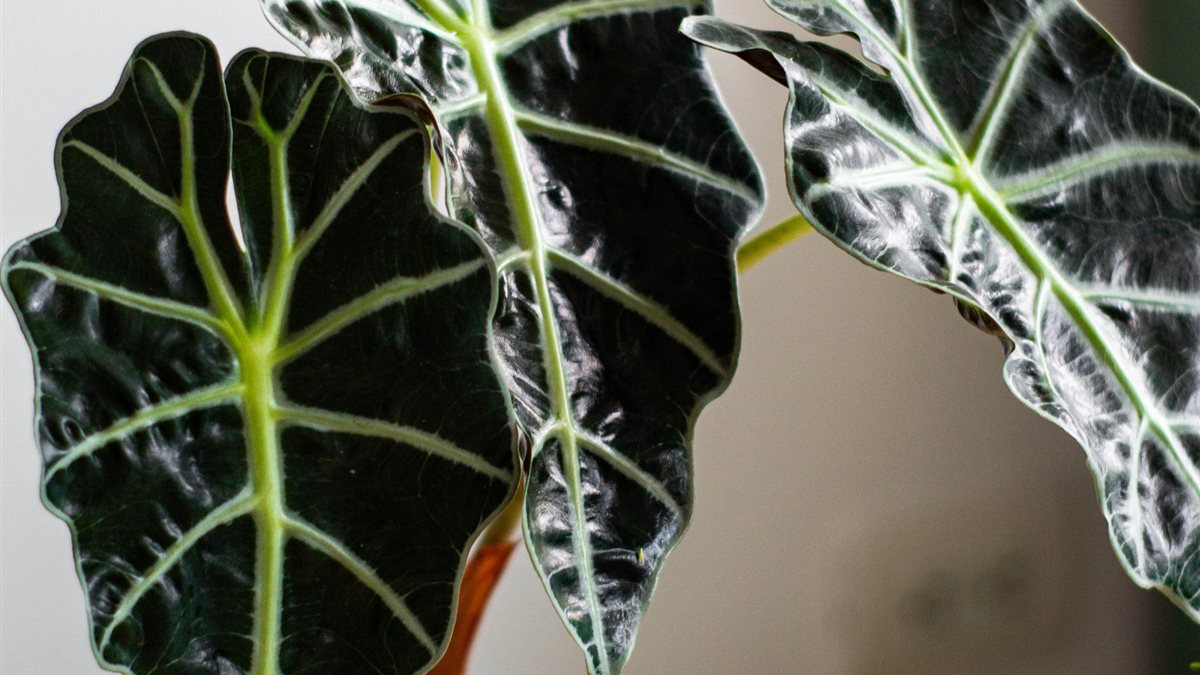
Check what remains below the missing leaves
The Royal Horticultural Society’s alocasia guidance describes reduced growth and foliage loss during winter dormancy. It also warns that excessive watering during that period can rot the roots.
A firm storage organ and sound roots suggest a different situation from soft, deteriorating tissue with an unpleasant smell. If inspection is needed, handle the plant with gloves and avoid repeated unpotting simply to see whether anything has changed.
Our guide to alocasia leaf loss helps review conditions.
Do not keep watering for leaves that are gone
A pot with less foliage may dry differently from the same plant in full growth. Check the medium before adding water instead of continuing the summer routine.
Keep the plant in suitable, stable conditions while you assess it. Do not put it somewhere cold to force dormancy, or soak a suspect corm in the hope of waking it.
NC State Extension’s alocasia profile also discusses reduced winter watering and overwintering. Its genus-level advice needs to be matched to the species and conditions you have.
Leaf loss with damage needs another explanation
Check the remaining stalks, any surviving foliage, and neighboring plants for pests. A plant declining after prolonged saturation should not be dismissed as “just sleeping.”
Use our alocasia problem guide to compare those warning signs before choosing a treatment.
Keep a dated note of the pot’s moisture and any new shoot. A leafless plant may still be viable, but patience is useful only when the remaining tissue is sound and its conditions are appropriate.