A pale crust gathers around the rim of a pot. You wipe it away, but it returns. Before reaching for a mold treatment, check whether you are seeing material left behind as water evaporates.
The outside of a pot can reveal something about the water and fertilizer going through it. It cannot, by itself, identify every white patch.
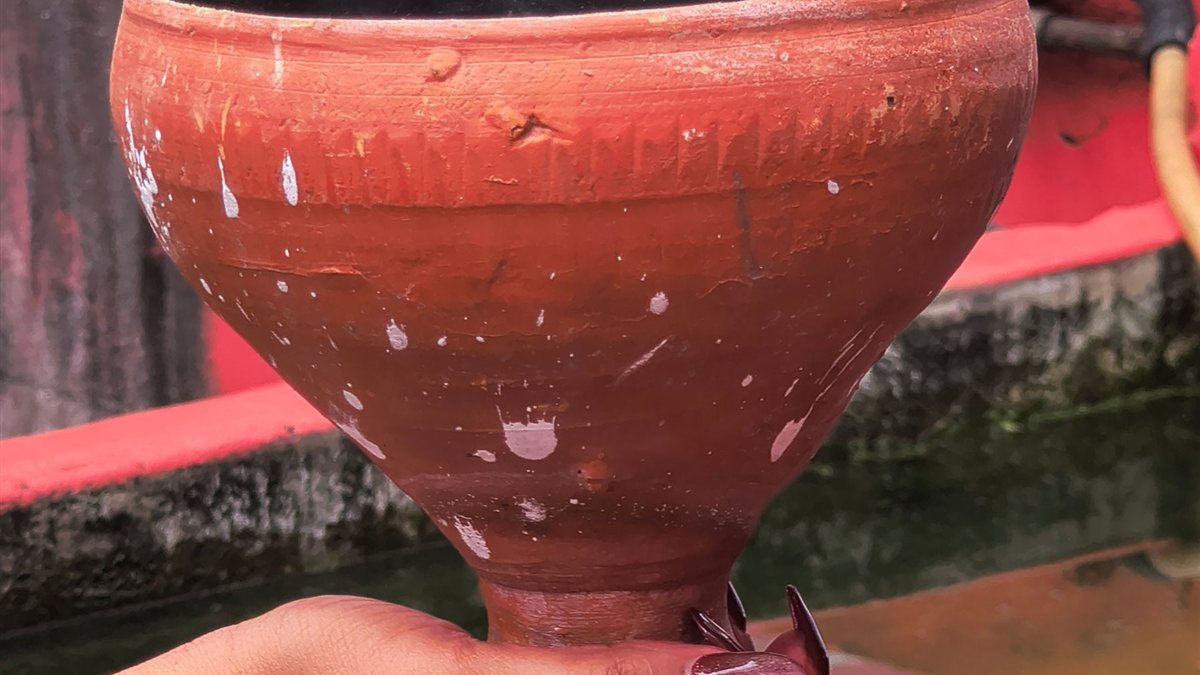
Start with the texture and location
A dry, crusty deposit on the rim, outside of a porous pot, or surface of the mix can be mineral residue. University of Maryland Extension identifies hard water and fertilizer as sources of salt deposits around indoor plants.
Fuzzy growth has a different appearance. Compare that with our guide to mold on potting soil rather than treating the word “white” as an identification.
The photograph illustrates surface marks on terracotta; a photograph alone cannot confirm their composition.
Cleaning the rim does not reset the root zone
Wiping the outside improves the appearance, but consider the routine behind a recurring crust. Check how much fertilizer you use and whether water can flow through the mix and leave the pot.
Do not add more feed to compensate for a plant that looks unhappy until you have reviewed the existing dose. A residue problem and a nutrient shortage are different possibilities.
Where the plant and growing medium allow it, flushing a draining pot with fresh water can help remove accumulated salts. Let runoff escape rather than collect beneath the roots. A saturated, poorly draining pot needs its drainage problem addressed first.
Three checks before changing the mix
- Read the fertilizer label. Compare the concentration you actually mix with the instructions.
- Inspect the outlet. Water needs to leave the container, not simply reach an outer cover.
- Note the pattern. Record whether deposits recur across several pots using the same water.
Our drainage guide helps with the second check. Repotting every affected plant is not the first step when the same watering and feeding routine would follow it into the new pot.