After roughly two years in an office, a snake plant produced something its owner had not seen before: a flower stalk. The owner was delighted. The comments soon turned the surprise into a debate about whether the plant was thriving or stressed.
Sharing the photograph in r/houseplants, u/Pup_Boozer wrote:
“I just noticed it spring up yesterday. Very excited to see it bloom.”
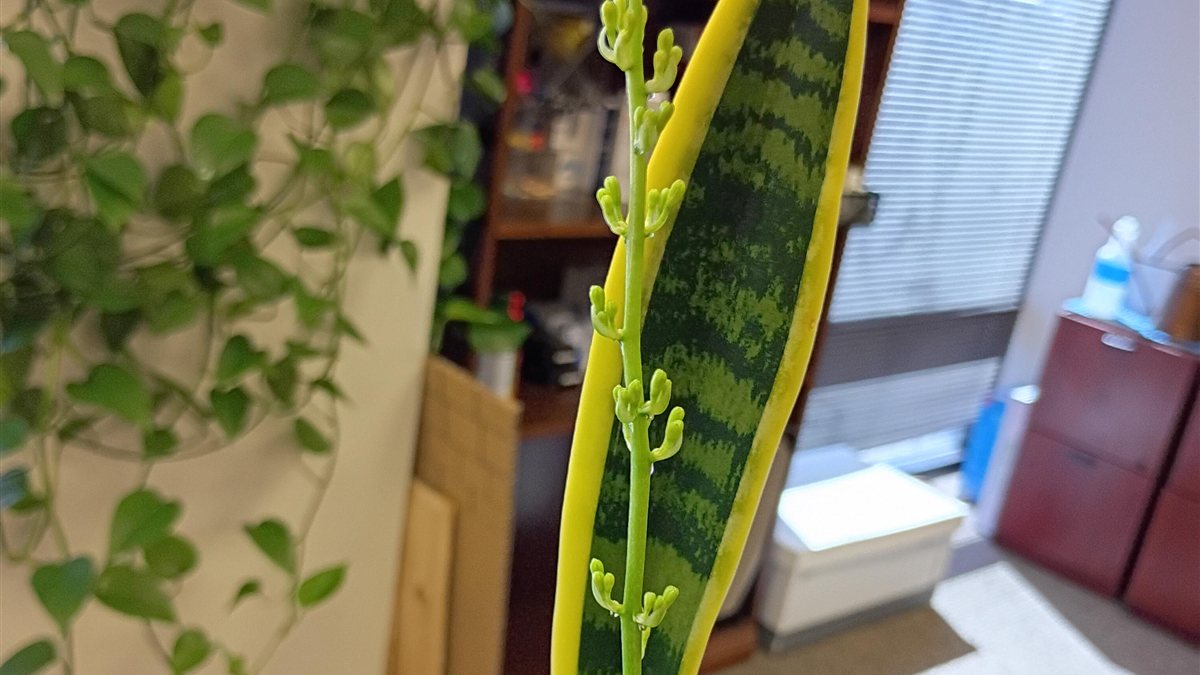
One recent change stood out
In the discussion, the owner said the plant had spent most of its office life near a break-room window with limited light. It had moved to a better spot about a month before the stalk appeared.
That sequence makes the change in placement worth noting. It does not establish why this particular plant flowered. The thread contains competing explanations, and neither enthusiasm nor a confident comment turns a guess into a diagnosis.
NC State Extension’s snake plant profile describes indoor flowering as rare. A bloom is an interesting event, but it is not a standalone test of the roots, the watering routine, or the light.
Do not try to recreate a “stress bloom”
Withholding water, crowding roots, or moving a plant into harsh sun to chase flowers introduces problems without proving the theory behind it. A flowering plant still needs care suited to its conditions.
If your snake plant produces a stalk, check the things you can observe: whether leaves remain firm, whether the pot drains, and how long the mix stays wet. Investigate soft tissue or a deteriorating base as a separate concern rather than explaining everything through the bloom.
Our guide to how much light a snake plant needs helps assess placement. For moisture, use a condition-based watering check instead of tightening or stretching a calendar to influence flowering.
This office plant gave its owner a reason to celebrate. What it did not provide was a controlled experiment showing that stress, neglect, or one specific move caused the flowers.