

‘Curly Fries’ hosta forms a small clump of narrow, rippled chartreuse leaves. Its shape contrasts with broad-leaved hostas, making it useful near a path, in a small bed, or among larger shade perennials.

The cultivar was named 2016 Hosta of the Year by the American Hosta Growers Association. Its chartreuse foliage, compact size, and curled leaf edges make it stand apart from hostas with broad blue, green, or variegated leaves.
‘Curly Fries’ Gets Its Name From the Leaves
Thin leaves extend from the center of the plant and twist along their ruffled edges, creating the shape behind the ‘Curly Fries’ name. The foliage starts in a yellow-chartreuse range and can shift toward cream.
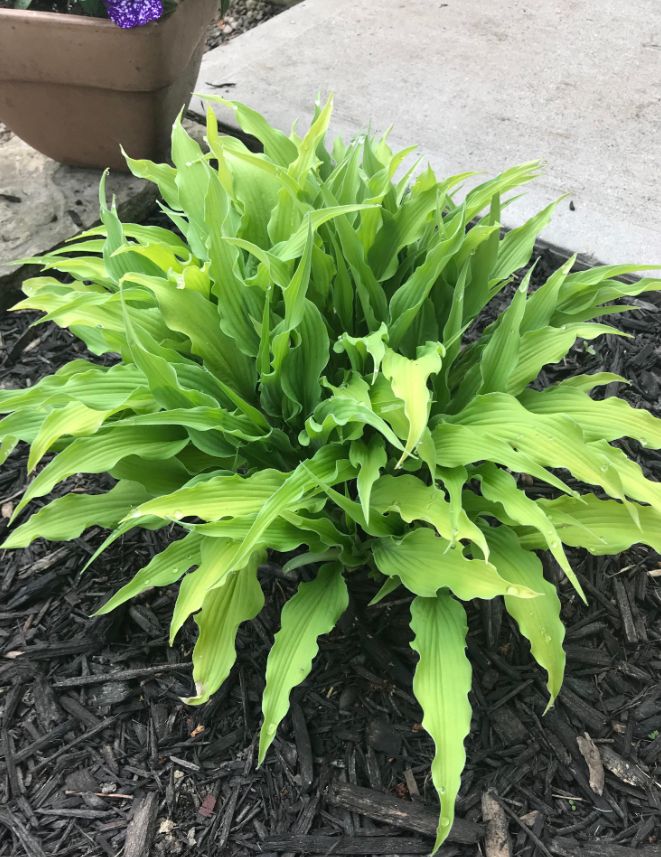
Size varies with growing conditions and the supplier’s measurements. Check the label’s mature spread before placing it between other hostas, rather than judging spacing from a young nursery plant. Lavender flowers rise above the foliage during bloom.
Light Changes the Chartreuse Color
‘Curly Fries’ is grown as a hardy shade perennial. Brighter light can shift its chartreuse foliage toward pale cream; introduce stronger exposure with care and watch for scorch during hot, dry weather.
Choose fertile soil with good drainage and keep it moist during dry periods. Waterlogged soil should be avoided, as should sites that dry out for long stretches during summer.
Expect It to Return Each Spring
Like other herbaceous hostas, ‘Curly Fries’ dies back after the growing season and emerges again in spring. Its narrow foliage makes it useful beside hostas with larger leaves, where the difference in leaf shape becomes easy to see.
If leaves develop crisp edges or brown bands, compare hosta damage patterns before pruning. A clump that outgrows its space can be divided when conditions allow it to establish.
Reference: the American Hosta Society’s profile of ‘Curly Fries’ documents its 2016 Hosta of the Year award and foliage.


