

Hostas tend to fill shade gardens with wide leaves that form dense mounds, but one cultivar breaks that familiar shape. ‘Curly Fries’ produces long, narrow leaves with rippled edges, giving gardeners another foliage form without leaving the hosta family.

The cultivar was named 2016 Hosta of the Year by the American Hosta Growers Association. Its chartreuse foliage, compact size, and curled leaf edges make it stand apart from hostas with broad blue, green, or variegated leaves.
‘Curly Fries’ Gets Its Name From the Leaves
Thin leaves extend from the center of the plant and twist along their ruffled edges, creating the shape behind the ‘Curly Fries’ name. The foliage starts in a yellow-chartreuse range and can shift toward cream.
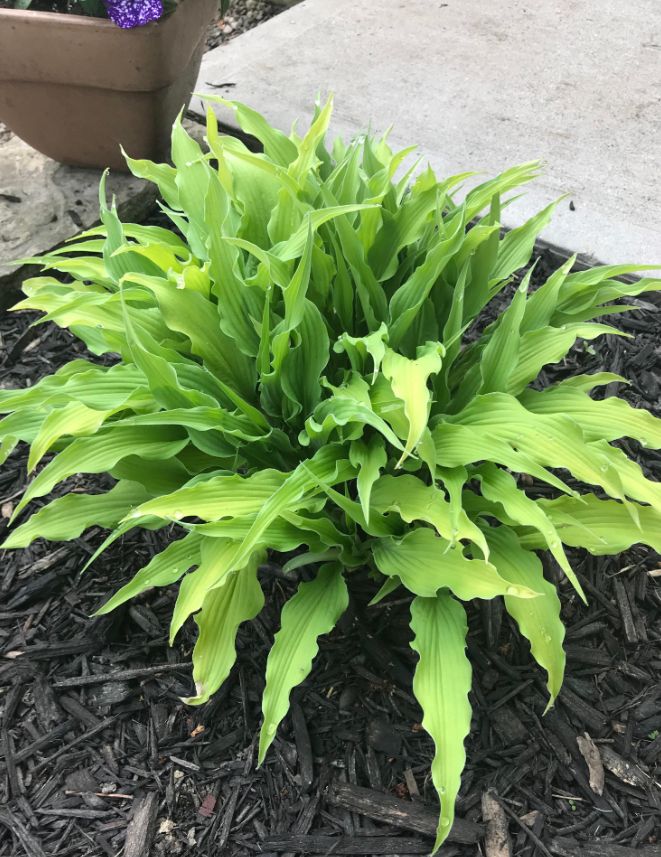
At about 11 inches tall and 22 inches wide, the plant stays compact enough for borders, small shade beds, and spaces between larger hostas. Lavender flowers rise above the foliage during bloom.
Some Sun Brings Out the Chartreuse Color
‘Curly Fries’ grows in USDA zones 3 through 9 and handles partial to full shade. Some sun can strengthen its chartreuse color, while harsh exposure can damage the foliage.
Choose fertile soil with good drainage and keep it moist during dry periods. Waterlogged soil should be avoided, as should sites that dry out for long stretches during summer.
Expect It to Return Each Spring
Like other herbaceous hostas, ‘Curly Fries’ dies back after the growing season and emerges again in spring. Its narrow foliage makes it useful beside hostas with larger leaves, where the difference in leaf shape becomes easy to see.
Deer, rabbits, and slugs can feed on the plant, so protection may be needed where these pests are common. For hosta collectors, however, the main draw is simple: the familiar shade perennial takes on a form that looks far removed from the classic broad-leaf hosta.


