Philodendron ‘Burle Marx’ can form a dense display of green, heart-based leaves or climb when given support. It does not need a blanket weekly fertilizer routine to look full. Start with reliable identification, bright light, and a mix that holds moisture without keeping roots saturated.

Separate the cultivar from a similarly named species
Singapore’s National Parks Board profile distinguishes the cultivar ‘Burle Marx’ from Philodendron burle-marxii and describes differences in their foliage. A shared tribute to the landscape architect does not make the names interchangeable. Ask the grower what is being sold rather than attaching a wild origin or mature size to a trade label. Choose this plant for its foliage, not an unsupported promise that it will purify a room’s air.
Plan for dense stems or climbing growth
Without support the plant can form a mound; its roots can also attach as it climbs. Give it a stable container and enough room for expanding foliage rather than assuming it has a permanent two-foot limit. Install a support if upward growth suits the space and secure stems loosely. Keep foliage away from children and pets who may chew plants.
Use bright light and acclimate to stronger exposure
Bright indirect light is a useful indoor starting point. The amount of sun a plant can tolerate depends on acclimation and conditions, so avoid moving shaded indoor foliage straight into hot direct sun. Increasingly stretched stems may indicate insufficient light. Our indoor-light guide helps assess the actual window position.
Avoid drafts and measure humidity if needed
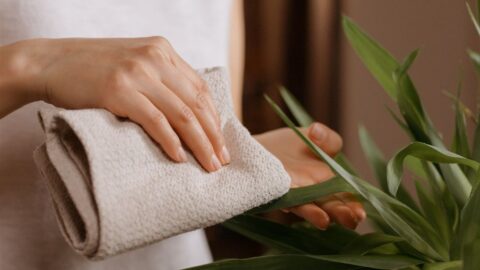
Keep conditions warm and steady, away from cold glass and hot outlets. Measure humidity before treating every dry leaf edge as a dry-air problem. A maintained humidifier can help in a dry room, while wiping leaves removes dust rather than providing lasting humidity. Avoid a stagnant, wet enclosure and maintain airflow around the foliage.
Use a root zone with moisture and air
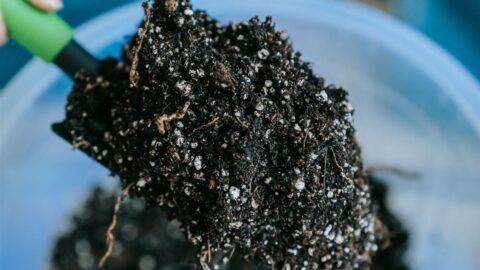
Choose a draining pot and a mix that retains some moisture without staying compacted and saturated. Bark or coarse mineral amendments can improve structure, depending on the base mix. A wet root ball can impair oxygen availability and favor deterioration, but root color alone is not a diagnosis. Examine firmness and tissue breakdown when inspecting roots.
Check the plant regularly
Look beneath leaves and around stem joints, remove fallen material, and check that support ties remain loose. Photograph the plant if a problem is developing so you can judge progression. Do not change light, feed, pot size, and watering simultaneously for a single imperfect old leaf. Start with the root zone and recent changes.
Water thoroughly when the upper mix has dried
Feel below the surface and compare pot weight. When the upper mix is dry and the root ball is losing moisture, wet it thoroughly and allow complete drainage. Avoid keeping it continuously wet or repeatedly drying it hard. There is no universal weekly summer schedule or requirement to dry the entire pot in winter. Adjust to the plant’s actual drying rate.
Feed active growth at the label rate
Use a houseplant fertilizer according to its instructions and account for nutrients already in fresh mix. Weekly high-nitrogen feeding is not a universal requirement. Organic products can also be overapplied. Reduce feeding when growth slows or roots are struggling; fertilizer will not repair waterlogged roots or make up for a dark position.
Repot when space or mix requires it
Inspect if roots densely fill the container, the pot dries unusually fast, or the mix no longer wets and drains properly. Move to a modestly larger pot only when more root space is needed. Preserve healthy roots and reassess watering after the move. Our repotting guide covers the checks.
Propagate from viable stem tissue or divisions
The National Parks Board lists stem cuttings and division as propagation methods. Select healthy material with viable nodes; divide only sections that can retain functioning roots and growth points. A detached leaf alone cannot become a complete vine. Use clean tools, moist airy medium or clean water as appropriate, and monitor for decay. Our Philodendron propagation guide explains the choices.
Identify insects before spraying
Inspect for thrips, scale, spider mites, and mealybugs. Silvery damage, sticky deposits, or white cottony material are clues to investigate, not reasons to apply neem oil to every plant. Isolate an infested specimen and follow a treatment suited to the pest and product label. Reinspect because hidden stages can survive an initial wipe.
Check several causes of brown leaves
Moisture stress, root damage, exposure changes, dry air, fertilizer salts, and pests can contribute to brown tissue. Dry-feeling edges do not prove the root ball needs water. Check below the surface and review recent products and moves. Old dead tissue will not regain its color, so monitor whether new damage stops instead of expecting damaged leaves to recover.
Distinguish thirst from impaired roots
Wilting with dry mix may indicate thirst, while wilting in persistently wet mix calls for a root inspection. A plant can lack water inside its tissues even when damaged roots sit in abundant moisture. Do not keep watering until it perks up without checking the pot. Keep this aroid out of chewing reach because its calcium oxalate crystals cause irritation, and seek veterinary advice if a pet eats it.