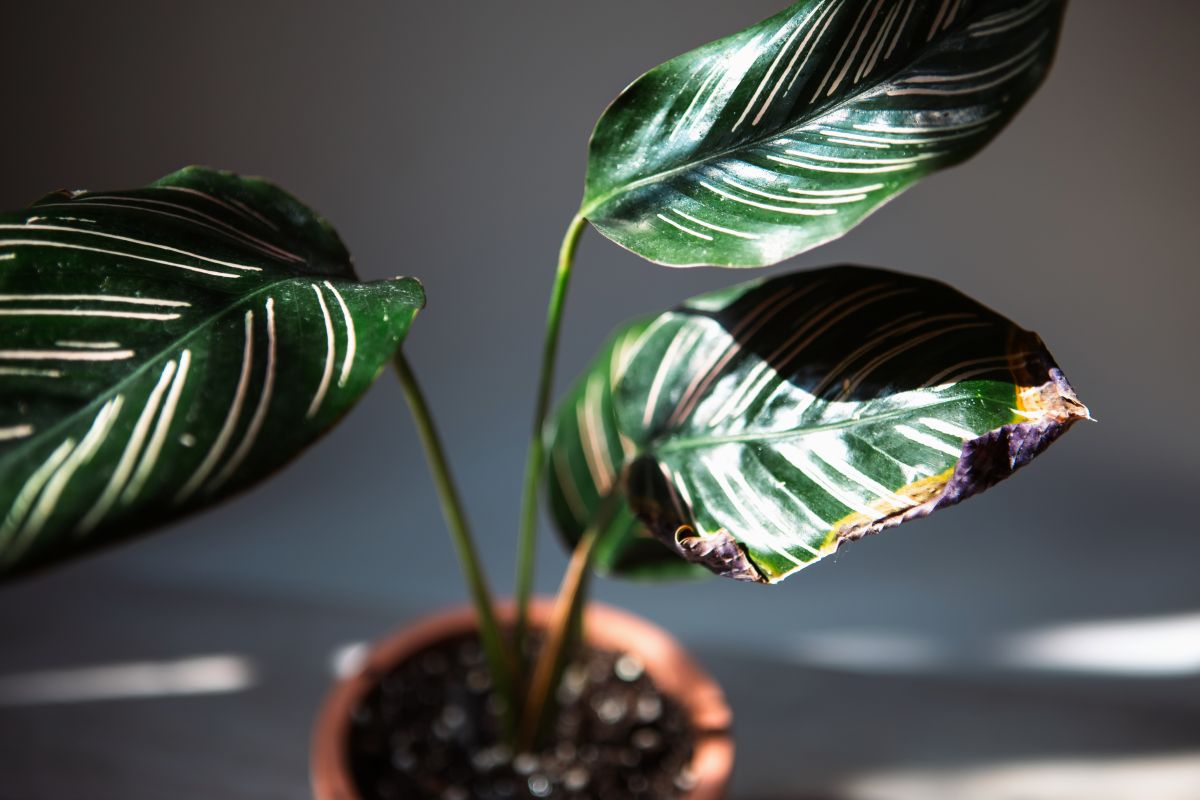
The first time my peace lily developed black leaves, I assumed it was dying. Black feels final in a way yellow never does. What I learned, though, is that black leaves aren’t a mystery or a single problem. They’re a reaction, and peace lilies are very clear once you know what to look for.

Here are the five reasons I now check, in the exact order that’s worked for me.
1. Overwatering (the most common cause)
This is where I always start, because it’s responsible for most cases.
Peace lilies don’t like soggy soil. When roots sit in constant moisture, they lose oxygen, and leaves respond by turning dark, soft, and eventually black.
What tipped me off:
- Soil still wet days after watering
- Leaves turning black at the base first
- A heavy pot that never seemed to dry
How I fixed it:
- Stopped watering immediately
- Let the soil dry out several inches deep
- Adjusted my routine to watering only when the top layer is dry
2. Poor drainage (even if you’re watering “correctly”)
I learned that watering frequency doesn’t matter if excess water has nowhere to go.
A peace lily in a pot without drainage holes can drown even on a conservative schedule.
Signs I missed at first:
- Water pooling at the bottom of the pot
- Soil staying dense and compacted
- Roots smelling slightly sour
The fix:
- Repotted into a container with drainage holes
- Used fresh, well-draining potting mix
- Made sure the pot never sat in standing water
3. Cold drafts and temperature stress
Peace lilies are tropical. Cold air affects them faster than I expected.
What caused it for me:
- Placement near a poorly insulated window
- Proximity to a door that opened frequently in winter
- Cold nighttime temperature swings
Blackening started at the leaf edges and spread inward.
What worked:
- Moving the plant to a stable spot
- Keeping it between 65–80°F
- Avoiding vents, windows, and drafty hallways
4. Fungal issues encouraged by moisture
When black appears in spots or patches rather than whole leaves, I think fungal, not watering alone.
What it looked like:
- Dark spots with yellow halos
- Blackening that spread leaf to leaf
- Leaves staying wet for long periods
What I did:
- Pruned affected leaves with clean tools
- Improved airflow around the plant
- Reduced watering frequency
- Let soil dry properly between waterings
Catching this early made a huge difference.
5. Normal aging (often mistaken for disease)
Not every dark leaf is a crisis.
Older peace lily leaves naturally darken and die back as the plant renews itself.
How I tell the difference:
- Only one or two lower leaves affected
- Firm texture, not mushy
- No spread to healthy leaves
What I do:
- Trim aging leaves at the base
- Focus on overall plant health, not individual leaves
If multiple leaves are turning black quickly, aging isn’t the cause.
How I fix black leaves fast now
When black leaves appear, I follow this order every time:
- Check soil moisture
- Confirm drainage
- Assess temperature and drafts
- Look for spotting or spread
- Consider age and pot size
I don’t treat symptoms randomly anymore. I diagnose first.
My takeaway
Black leaves don’t mean your peace lily is doomed. They mean something has gone wrong consistently, not suddenly. Once I stopped guessing and started reading the plant’s environment, fixes became straightforward.
Peace lilies recover well when you correct the cause quickly. The key is knowing where to look first.