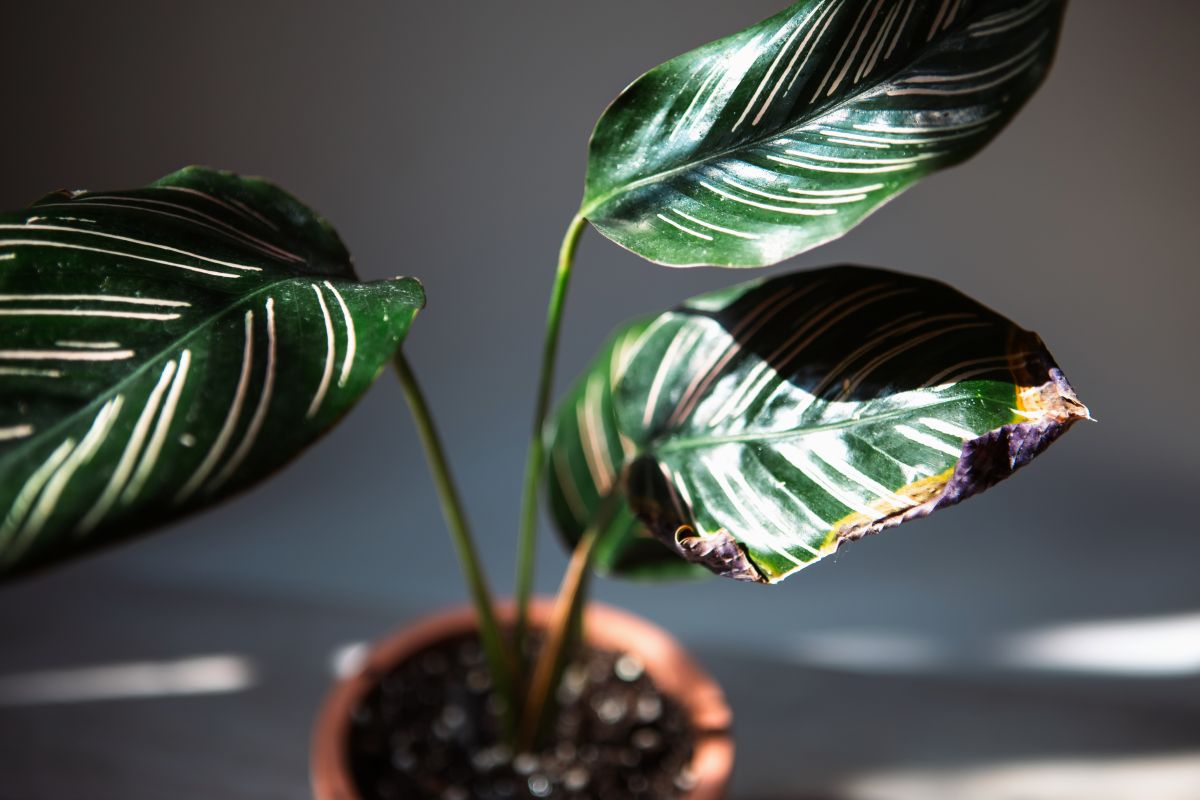
When my orchid dropped its flowers, I wasn’t worried. That part I expected. What caught my attention weeks later were the leaves. Instead of staying firm and glossy, they started to sag. Not yellow right away. Just… tired.

That’s when I knew something deeper was wrong.
Droopy leaves aren’t part of normal dormancy
Orchids resting after a bloom still keep their leaves plump. When leaves lose structure, the issue is almost always happening below the surface.
In my experience, drooping leaves usually mean one thing: the roots aren’t doing their job.
That can happen for two opposite reasons:
- Too much water
- Not enough water
And frustratingly, the leaves can look similar in both cases.
The fastest way I diagnose the problem
I don’t guess anymore. I check the roots.
I gently slide the orchid out of its pot and look closely.
Healthy roots look like:
- Firm and plump
- Green when wet, silvery-white when dry
Overwatered roots look like:
- Dark brown or black
- Soft, mushy, or stringy
- Sometimes with a sour smell
Underwatered roots look like:
- Thin and brittle
- Wrinkled or hollow
- Dry even after watering
Once I see the roots, the solution becomes clear.
What I do if the roots are rotting
If roots are mushy, the plant is drowning.
My fix is decisive but gentle:
- Trim off all dead roots with clean scissors
- Remove old, soggy potting mix
- Repot in fresh, airy orchid mix
I don’t water immediately after repotting. I let the roots settle and dry slightly first.
What I do if the orchid is dehydrated
This one surprised me the first time. Even though I was “watering,” the roots weren’t absorbing anything.
Here’s what worked:
- Rinse the roots gently
- Trim off dead, dry sections
- Soak the roots in room-temperature water for about 20 minutes
I keep the leaves dry during this process. After soaking, I repot in fresh mix.
What I cut and what I leave
Leaves that have gone fully yellow won’t recover. I leave them until they fall on their own unless they’re completely brown.
Flower spikes that are dead get trimmed. The plant needs its energy for root recovery, not blooming.
What I changed going forward
Droopy leaves taught me to adjust my routine.
Now I:
- Water only when roots look silvery
- Make sure pots drain freely
- Avoid letting orchids sit in water
- Pay more attention to roots than schedules
Orchids don’t want frequent watering. They want proper airflow and timing.
My takeaway
Droopy orchid leaves aren’t a death sentence. They’re feedback. Once I stopped reacting emotionally and started checking the roots, fixing the problem became straightforward.
Orchids aren’t fragile. They’re precise. And when you meet them where they are, they recover better than most people expect.