One orchid label says to add ice cubes. Another grower warns that ice will damage tropical roots. Before choosing a side, look at the experiment behind the advice.
The useful question is not whether every orchid should receive ice. It is which plants, growing medium, and amount of water the research compared.
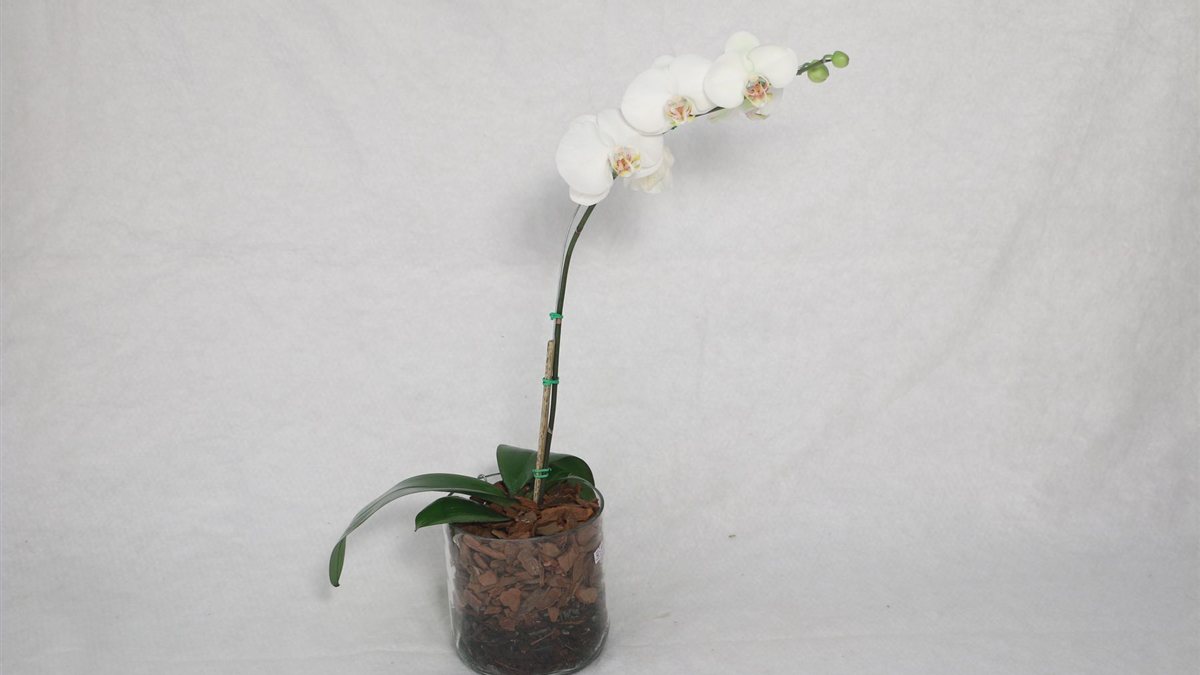
The study used Phalaenopsis in bark
Ohio State University’s research summary describes trials at Ohio State and the University of Georgia. Researchers compared ice irrigation with an equivalent volume of room-temperature water on Phalaenopsis orchids.
Their measurements included flower longevity and leaf and root health. Ice irrigation did not reduce those measures under the conditions tested. The recommendation used in the trial was three ice cubes each week, placed on the medium rather than against leaves.
That result answers a specific concern about the tested setup. It does not establish one universal dose for a miniature orchid, a large specimen, sphagnum-packed roots, and a mounted plant.
The amount of water still matters
Homes & Gardens includes ice among orchid watering methods. The limitation to carry into your own routine is that cubes are a way of delivering water, not a substitute for checking the plant.
Cube size varies, and so do pot size, root mass, light, and room conditions. Look at how the bark dries and the condition of the roots before repeating a dose because a week has passed.
Our orchid watering guide covers those checks. Use the needs of your orchid to assess the instructions, rather than treating “three” as a number that fits every pot.
Neither method fixes standing runoff
Water left inside a decorative cover can remain around roots whether it began as liquid or ice. Empty it after irrigation.
For the plant used in the trials, see our Phalaenopsis care guide. If yours is another orchid group or grows in another medium, seek guidance for that setup.
The research is useful precisely because it describes what was tested. Keeping that detail prevents a measured finding from becoming a blanket rule.