

Slow growth or a change in leaf position does not identify one houseplant problem. Compare the plant’s normal habit with its light, soil moisture, and recent changes before increasing watering or feeding.
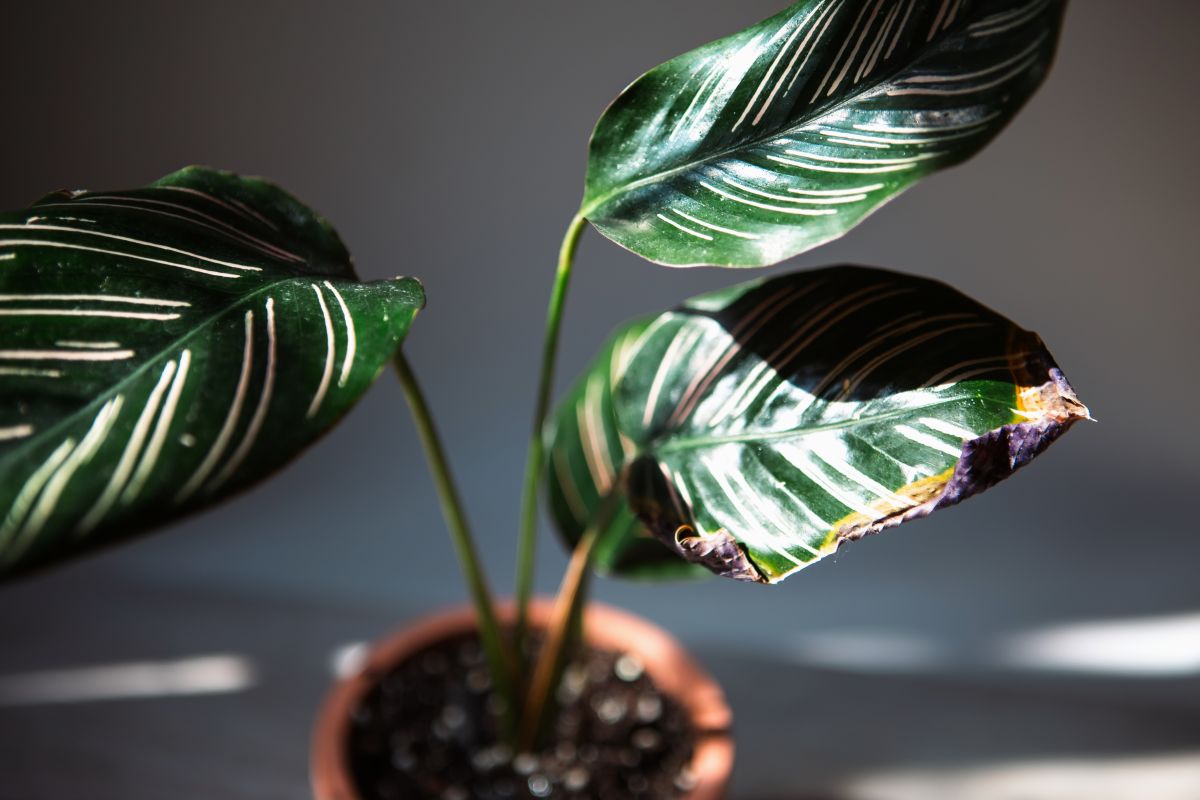
Identify the Plant Before Interpreting Its Leaves
Some prayer plants fold their leaves with the day–night cycle, while other species may curl in response to dry roots, heat, or pests. The same appearance can have different meanings. Find the plant’s name before applying care advice.
Avoid Several Changes at Once
Moving the pot, adding water, repotting, and fertilizing together makes it difficult to tell what helped. Inspect first, then correct the clearest problem. A plant with saturated soil does not need more water because its leaves curl.
Check for Evidence of Active Decline
Look for new damage, spreading discoloration, collapsing stems, pests, or mix that remains wet. Firm tissue and occasional new growth can be reassuring, but neither proves every condition is suitable.
Compare Light and Moisture With the Species’ Needs
Use our guide to indoor light to assess the actual position. Check the root zone rather than watering only because growth has slowed. Seasonal light changes can reduce both growth and water use.
Record Changes and Watch New Growth
Photograph the plant and note the conditions. If it continues to decline, inspect roots and pests or seek identification advice. Do not dismiss persistent symptoms as the plant adapting. Reference: RHS guidance on helping a poorly houseplant. For a specific example, see prayer plant leaf curling.


