

Water a potted plant when its root zone needs moisture, not simply because a week has passed. The useful routine is to check the medium, water the root ball evenly, and let excess water escape. Plant type, light, temperature, pot size, and the growing mix all change how quickly the next drink is needed.

Check moisture before interpreting wilted leaves
A dry plant can wilt, but a plant with damaged, waterlogged roots can also wilt because those roots no longer function well. Feel the medium at a useful depth and lift the pot where practical. Check deeper in a large container, and consider the species: a fern and a jade plant should not reach the same dryness before watering. Our watering basics guide explains that distinction.
Use a checking routine rather than a watering calendar
Set reminders to inspect plants, then decide individually whether water is needed. A small pot in bright light may dry quickly, while a large pot in a cool room stays wet longer. Water demand often falls when growth and light decline, but not every species follows the same winter dormancy. Newly repotted plants can dry differently from established ones. Change the interval as conditions change rather than defending a fixed weekly schedule.
Water when needed, even if morning has passed
Morning can be convenient, particularly for outdoor containers, but do not leave a severely dry plant stressed all day solely to wait for an ideal hour. Indoors, the root-zone condition matters more than a strict time rule. Avoid unnecessary leaf wetting and trapped water in crowns. If an outdoor container dries rapidly in heat or wind, reassess its size, exposure, and water demand instead of assuming one morning drink always lasts.
Apply water slowly across the medium
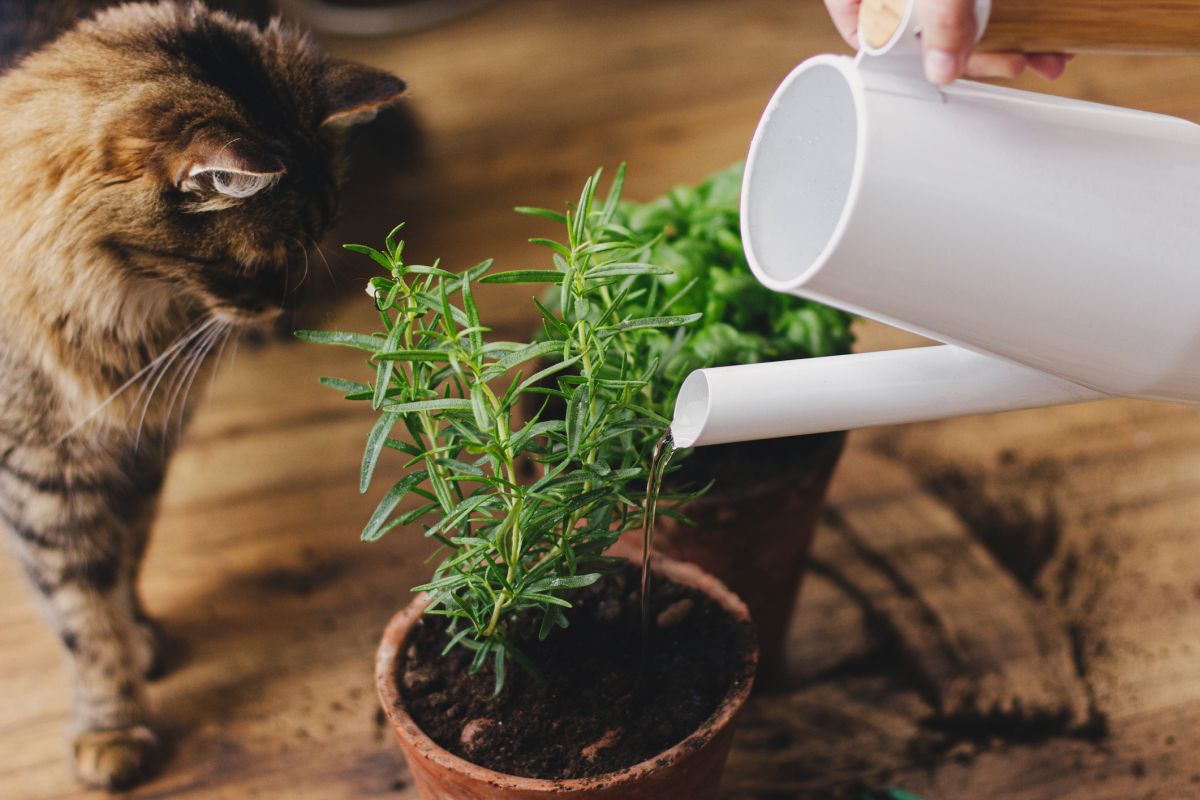
A narrow-spouted watering can helps reach the root zone without splashing nearby furniture. Wet the surface evenly and allow time for the mix to absorb water. A quick trickle from a drainage hole does not always mean the whole root ball is wet: very dry mix can repel water or leave channels down the pot wall. If needed, pause and water again gradually, then check that the root ball has rehydrated.
Bottom watering is an option, not permanent standing water
A draining pot can absorb water from a shallow container beneath it. Remove it after the medium has taken up sufficient moisture and allow it to drain; do not leave an ordinary nursery pot submerged indefinitely. Bottom watering can help avoid splashing foliage, but it does not remove fertilizer salts by flushing them out. A purpose-built reservoir system is different. Our self-watering pot guide explains that setup.
Empty runoff and review drainage
Once watering is complete, discard collected water from the saucer or decorative cover. Roots need oxygen as well as moisture, and a saturated container can restrict that supply. Use drainage holes and a medium suited to the plant rather than a gravel layer beneath the soil. Our drainage guide covers containers, and the University of Maryland Extension explains watering and soluble salt buildup.
Choose water by the plant and your supply

Ordinary tap water suits many houseplants. Sensitive species or a water supply with troublesome mineral content may need a different source. Avoid sodium-softened water for routine irrigation. Distilled water or appropriately treated water can be useful for particular plants, but ordinary filter pitchers do not all remove the same substances. The Virginia Cooperative Extension watering guide discusses water sources and moisture stress.
Investigate a pot that stays wet
Check for blocked holes, an oversized container, compacted medium, low light, or a damaged root system. Terracotta can dry more quickly than plastic, but it does not make overwatering impossible. If the plant declines while the mix remains wet, inspect the roots before adding fertilizer or more water. Our repotting guide explains how to assess a change of container or medium. When planning an absence, test a watering arrangement before relying on it.


