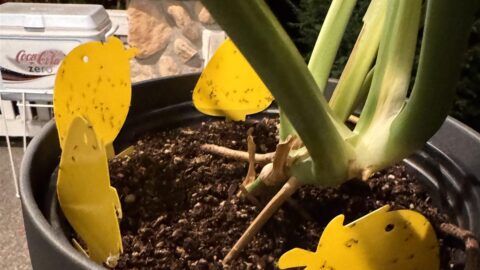
Winter is a useful time to inspect houseplants, but January is not a universal pruning deadline. Remove dead or diseased material as needed; postpone major reshaping until the plant and conditions support recovery.

1. Fiddle-Leaf Fig
Investigate continuing leaf loss before cutting healthy foliage for shape. Low winter light may slow recovery. See our fiddle-leaf fig symptom checks.
2. Pothos
Trim a vine when it obstructs a route or needs shaping, but address inadequate light if it is bare and stretched. Root suitable node-bearing cuttings rather than discarding all healthy sections.
3. Rubber Plant
Light tidying differs from major structural pruning. Do not rely on an unsupported claim that winter sap is always lowest. Keep its irritating latex off skin and tools clean.
4. Peace Lily
Remove spent flower stalks and dead leaves at the base without injuring the crown. A green spathe does not by itself require removal; compare peace lily pruning.
5. Spider Plant
Remove loose dead leaves and assess roots if the pot is crowded. Thinning healthy leaves is not a substitute for adequate light or a needed repot.
6. Indoor Sage
Harvest lightly from healthy growth if the plant is actively growing. Avoid cutting an already weak, light-starved herb hard into old wood.
7. Miniature Roses
Check variety, dormancy, pests, and growing conditions before shaping. Dead or diseased material can need attention outside the usual pruning season.
Reference
University of Minnesota Extension’s spring houseplant guidance discusses assessment before pruning. Do not treat a fixed one-third rule as suitable for every species and situation.