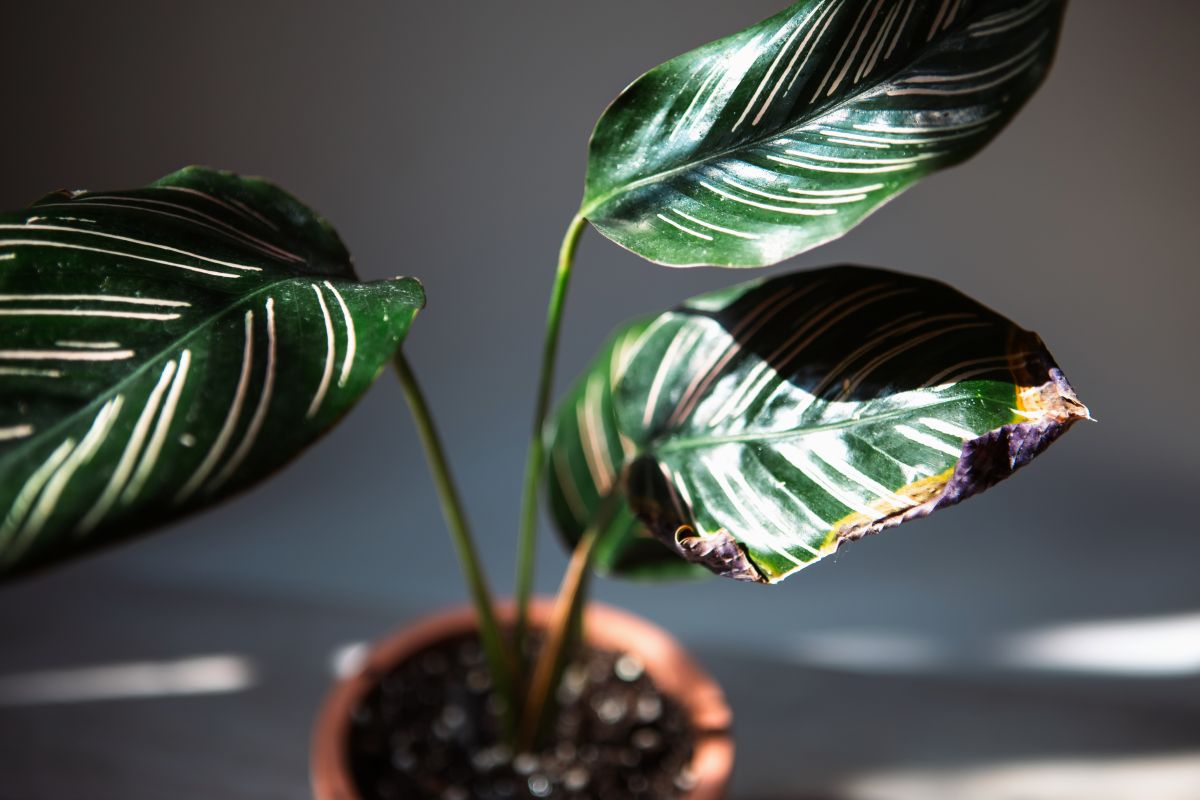
Peace lilies have a way of looking elegant even when they’re slightly neglected, which is why it’s easy to forget about pruning altogether. I used to assume that if I watered it and gave it decent light, it would sort the rest out on its own. It didn’t. Once I started pruning with intention, the difference in blooming was obvious.

There’s no pruning schedule and that’s the point
I don’t prune my peace lily on a calendar. I prune it when the plant tells me to.
The cues are subtle but consistent:
- Leaves turning yellow or brown
- Flower spathes fading from white to green
- Stems that look tired or limp
That’s when pruning helps. Waiting longer doesn’t make the plant stronger. It just forces it to waste energy on parts that are already done.
What pruning actually does for blooming
Peace lilies don’t rebloom from old flower stalks. Once a bloom fades, it’s finished.
By removing spent flowers and declining leaves, I’m doing three things at once:
- Redirecting energy to new growth
- Improving air circulation around the plant
- Reducing the risk of disease
More importantly, the plant responds by focusing on fresh foliage and future blooms instead of maintenance.
How I prune without stressing the plant
I keep it simple and minimal.
My approach:
- Sterilize scissors or shears with rubbing alcohol
- Cut yellow or brown leaves at the base
- Remove spent flower stalks close to the soil line
- Avoid trimming healthy green tissue
If only the tips of leaves are brown, I trim just the damaged portion, following the natural shape of the leaf.
How often this usually happens
In practice, that means:
- Light pruning every few weeks
- More frequent pruning during active growth
- Very little pruning in winter
Sometimes I don’t prune for a month. Other times, I remove a few things two weeks in a row. The plant sets the pace.
What I do after pruning
After pruning, I don’t change anything dramatically.
I make sure the plant has:
- Bright, indirect light
- Even moisture without soggy soil
- Stable room temperatures
That’s it. No extra fertilizer, no sealing cuts, no special treatment. Within a few weeks, I usually see new leaves or a fresh flower stalk starting.
What I avoid
Over-pruning is worse than under-pruning.
I never:
- Remove more than necessary in one session
- Strip the plant of too many leaves at once
- Prune just to make it look “perfect”
Peace lilies respond best to steady, gentle care.
My takeaway
Peace lilies don’t need frequent pruning, but they do need timely pruning. Paying attention to fading leaves and spent blooms does more for flowering than any strict schedule ever could.
Once I stopped asking how often I should prune and started watching when the plant needed it, blooming became much more reliable.