You open a fresh bag of potting mix or lift a nursery plant from its cover and notice white specks everywhere. If you have dealt with pests, they can look like the start of another infestation.
Some pale particles are ingredients added on purpose. Before discarding the mix or spraying it, compare what you see with what the bag says should be there.
Not every white particle has the same job
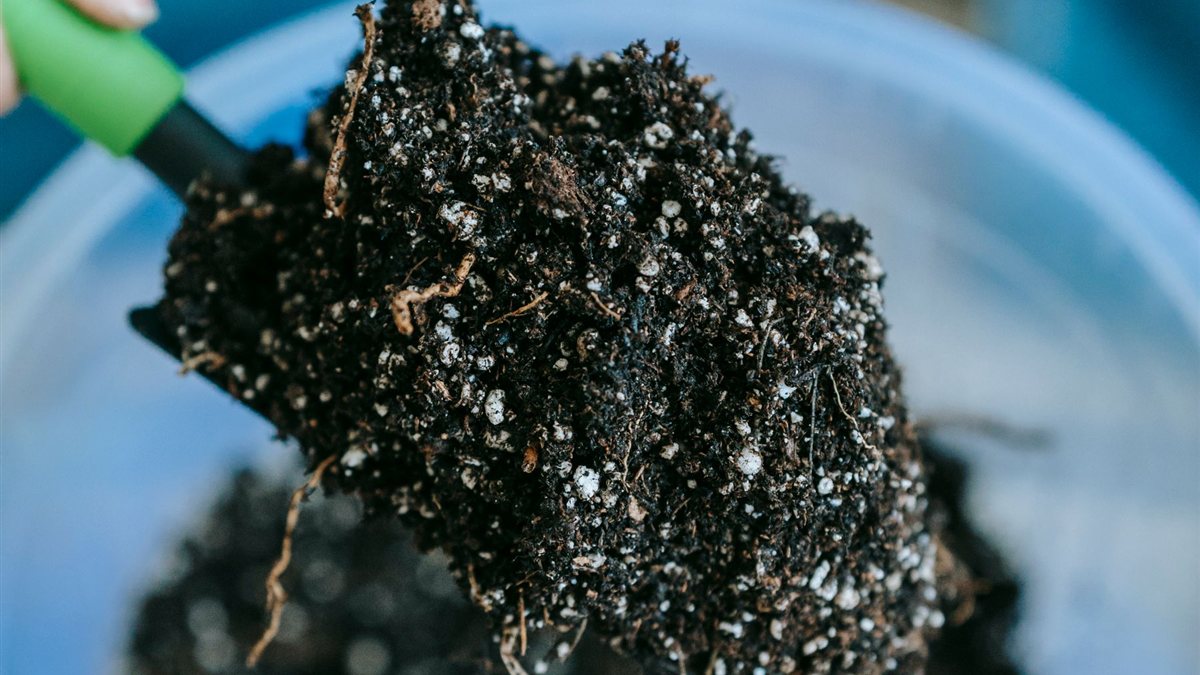
University of Maryland Extension’s potting guidance describes ingredients used in indoor growing media. Perlite is a common component: the pale, irregular pieces help create a more open mix.
Some mixes also contain controlled-release fertilizer granules. These tend to be more rounded and uniform than perlite, though appearance varies between products.
Neither description identifies every particle in an unfamiliar pot. Check the packaging or ask the supplier, especially when you did not choose the original mix.
Use a closer look instead of a squeeze test
- Compare the shapes. Irregular porous fragments and uniform rounded granules suggest different possibilities.
- Check the label. Look for perlite and any fertilizer already incorporated in the mix.
- Watch for movement. Moving organisms deserve identification, but stationary material is not automatically harmless.
- Inspect the plant. Leaf damage, webbing, or insects on stems provide context that a speck in the compost cannot.
Avoid crushing unknown granules with bare fingers to find out what is inside. A photograph and the product information are better starting points.
Do not solve a labeling question with another treatment
If the mix contains fertilizer, consider that before adding more. If it contains perlite, removing the white pieces would alter the mix rather than remove a pest.
Our repotting mistakes guide helps with decisions about replacing growing media. For white material spreading as a surface coating rather than separate particles, compare our guide to mold on plant soil.
The important distinction is between an ingredient, a deposit, and an organism. Establish which one you are looking at before treating the whole pot as an infestation.