Pale marks appear on an African violet after watering. Some look like rings or irregular patches, and the first suspicion is a pest. Before spraying, consider whether cold water touched those leaves.
African violets can develop a physiological leaf spot from that contact. The mark is damage to the tissue, rather than evidence by itself that an insect has fed there.
The water can leave more than a wet patch
Texas A&M’s plant disease handbook lists cold-water ring spot among African violet problems. Clemson Extension’s African violet guidance also cautions about cold water on the leaves.
This gives a plausible explanation when marks follow splashing and the pattern fits. It is not a way to diagnose every discolored violet leaf from across the room.
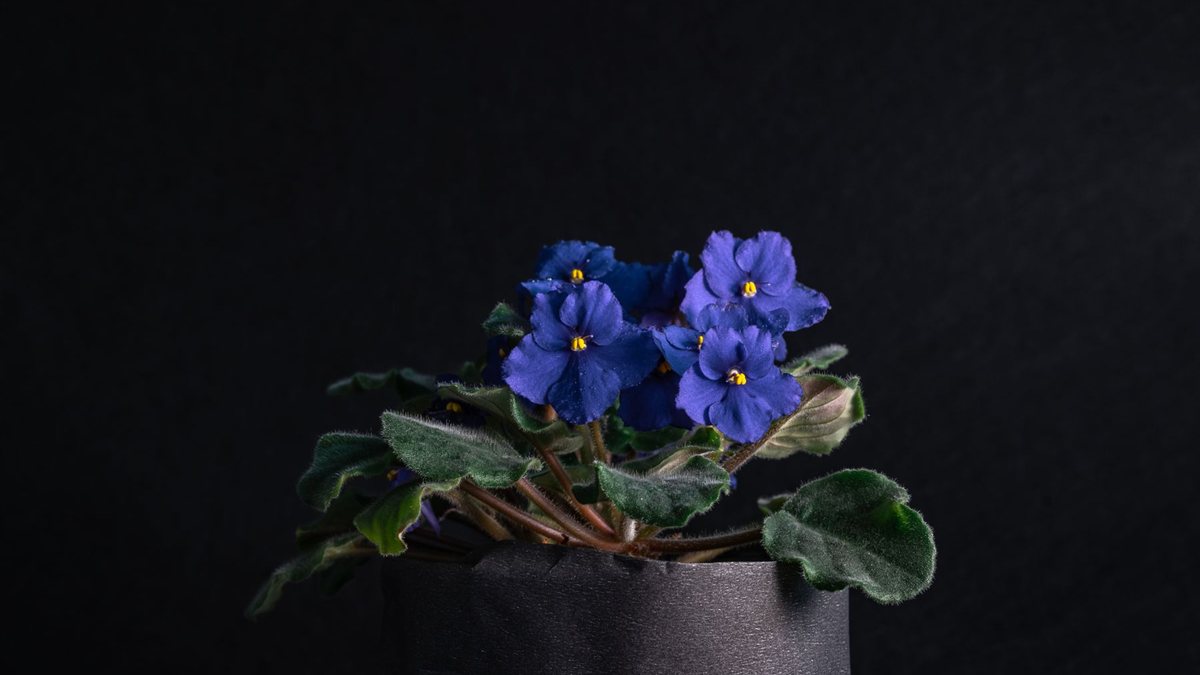
The photograph shows a flowering African violet for illustration, not a plant diagnosed with ring spot.
Change where the water goes
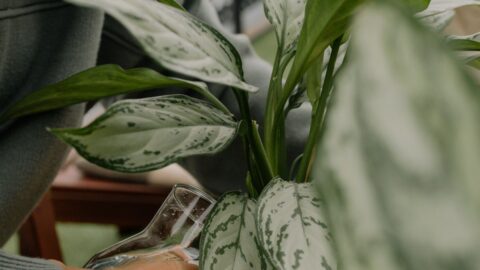
Use room-temperature water and direct it to the growing medium instead of over the foliage and crown. A watering can with a narrow spout gives you more control in a crowded rosette.
If you water from below, remove the pot after it has taken up moisture and allow surplus water to drain. A saucer should not become a permanent pool unless you are using a system designed and managed for that purpose.
Our houseplant watering guide explains why checking the growing medium is more useful than repeating the same amount each week.
Watch for new damage, not repaired rings
An existing spot will not turn back into undamaged green tissue. Photograph the leaves and watch whether new marks appear after you adjust your watering technique.
If lesions spread, become soft, or appear on new leaves without water contact, reconsider the diagnosis. Inspect for insects and check roots and growing conditions rather than assuming every later mark has the same cause.
Water trapped in the outer container is another concern to rule out; our drainage guide shows what to check underneath.
A pale ring can be a record of one watering incident. The next useful evidence is whether the plant produces sound new growth after the splashing stops.